
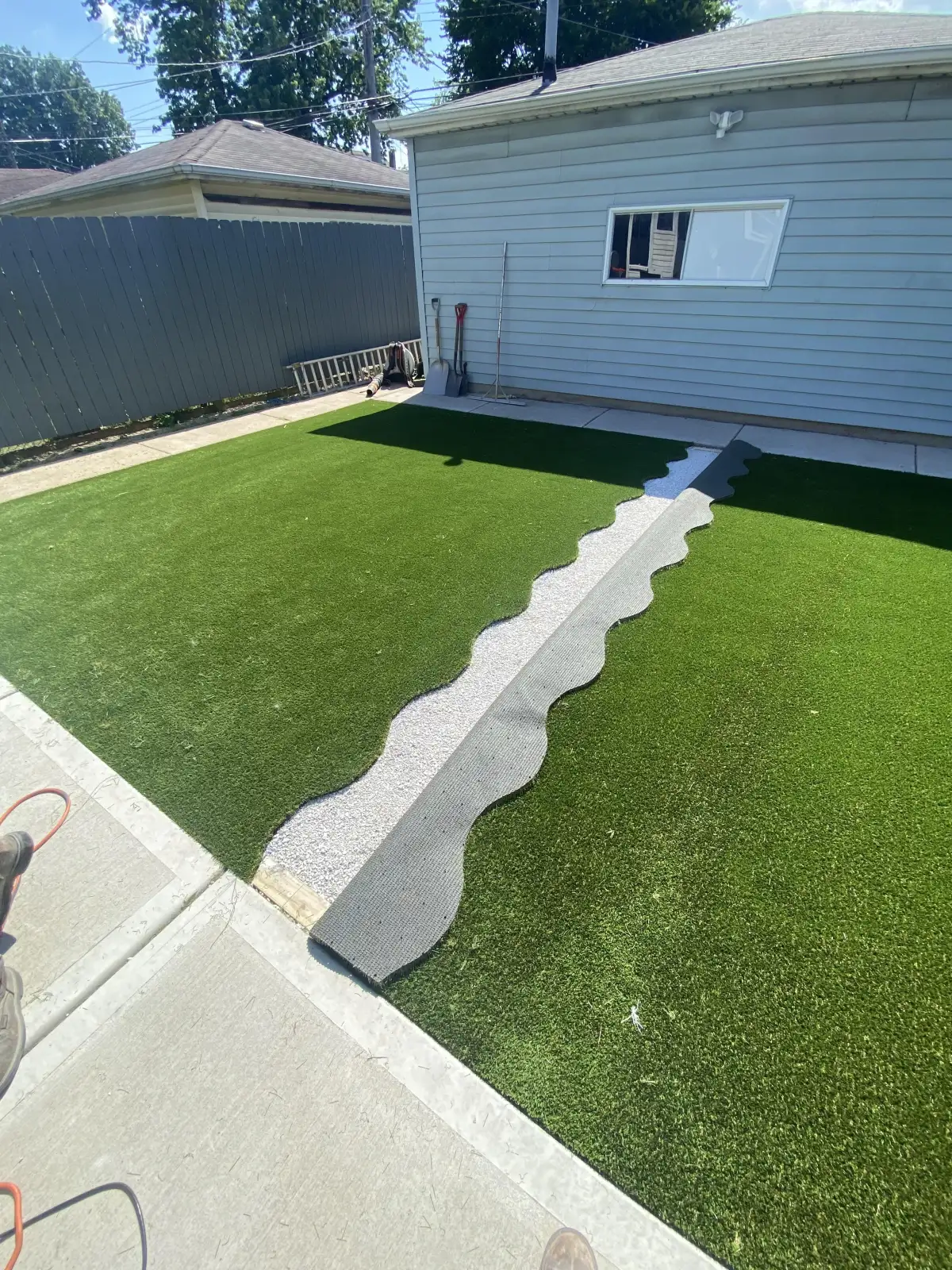
Professional Artificial Turf Installation in Michigan
Professional artificial turf installation in Michigan typically costs between $13 and $15 per square foot installed, depending on project size, turf grade, and base preparation requirements.
Built to Last Through Michigan Winters
At Great Lakes Synthetic Turf, we install artificial turf the way it should be done -- with a proper drainage stone base, framed edge systems, and commercial-grade seaming that holds up through Michigan's harshest freeze-thaw cycles. Every installation is owner-operated and built to the same standards we use on commercial projects.
Most homeowners spend 40 to 60 hours per year maintaining a natural lawn -- mowing, watering, fertilizing, and re-seeding bare patches. Artificial turf eliminates all of that while delivering a green, uniform surface 365 days a year. No irrigation costs. No chemical treatments. No brown patches in August or mud pits in March.
We use exclusively American-made turf products because material quality directly determines how long your installation lasts and how natural it looks. Imported turf often uses inferior UV stabilizers that break down after two or three Michigan summers. Our products carry 15-year warranties backed by domestic manufacturers you can actually reach if you need them. American-made turf also includes heat-reducing technology that keeps surface temperatures manageable during Michigan summers.
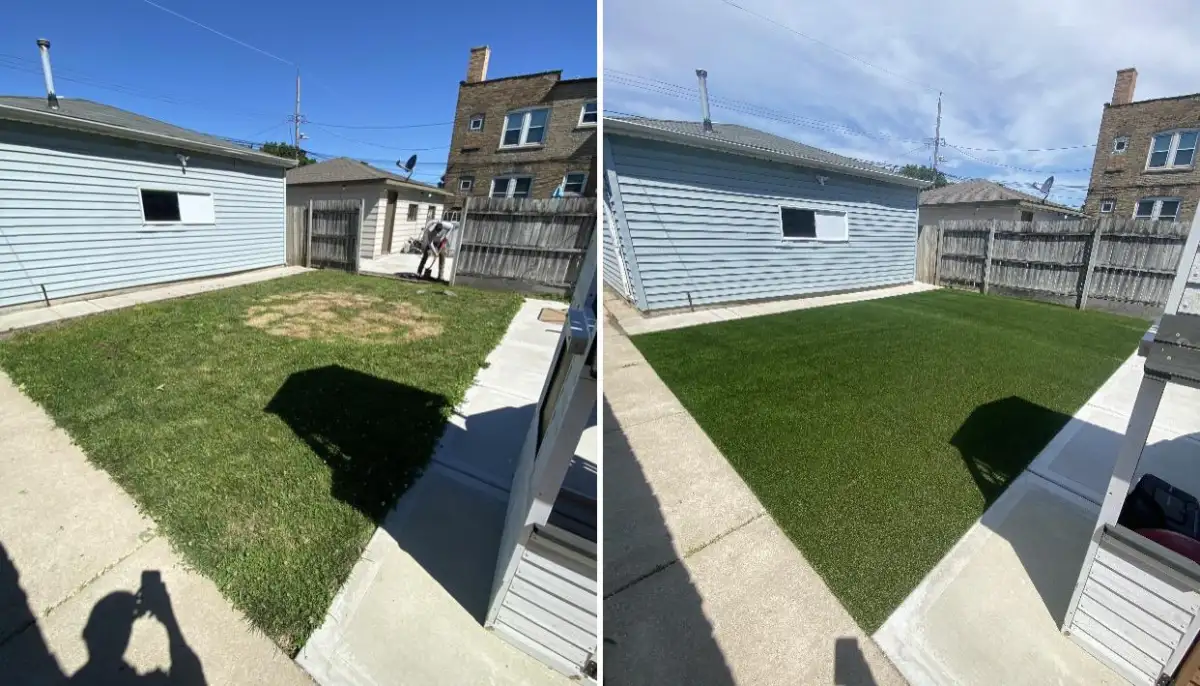
The 6-Step Installation Process
Every Great Lakes Synthetic Turf installation follows the same commercial-grade process -- whether it is a 200-square-foot pet area or a 5,000-square-foot backyard transformation.
Site Assessment
We evaluate your property's drainage patterns, soil composition, grade, and access points. This determines the exact base depth, drainage routing, and edge system your project requires. No two sites are identical, and we plan accordingly.
Excavation & Grading
We remove existing sod, organic material, and topsoil down to stable subgrade -- typically 4 to 6 inches. The excavated area is graded to direct water toward existing drainage infrastructure or new catch basins.
Drainage Stone Base
A layer of clean drainage stone is installed and compacted in lifts. This is the base layer that prevents settling, promotes drainage, and creates a stable platform that will not shift during freeze-thaw cycles. This step is what separates our method from compacted-soil shortcuts.
Compaction & Leveling
Using a plate compactor, we achieve 95% compaction density across the entire base. The surface is then screeded with a fine stone dust layer to create a perfectly smooth, level surface for the turf to sit on.
Turf Installation & Seaming
Turf panels are rolled out, positioned for optimal grain direction, and seamed using commercial-grade adhesive and seaming tape. Our framed edge system uses solid perimeter boards secured with 2-inch perimeter screws with built-in washers for a clean, permanent boundary.
Infill & Final Inspection
Kiln-dried silica sand or antimicrobial infill is distributed evenly across the turf using a drop spreader. The infill weighs down the fibers, provides cushioning, and helps blades stand upright. A final quality inspection covers seam integrity, edge tension, and drainage performance.
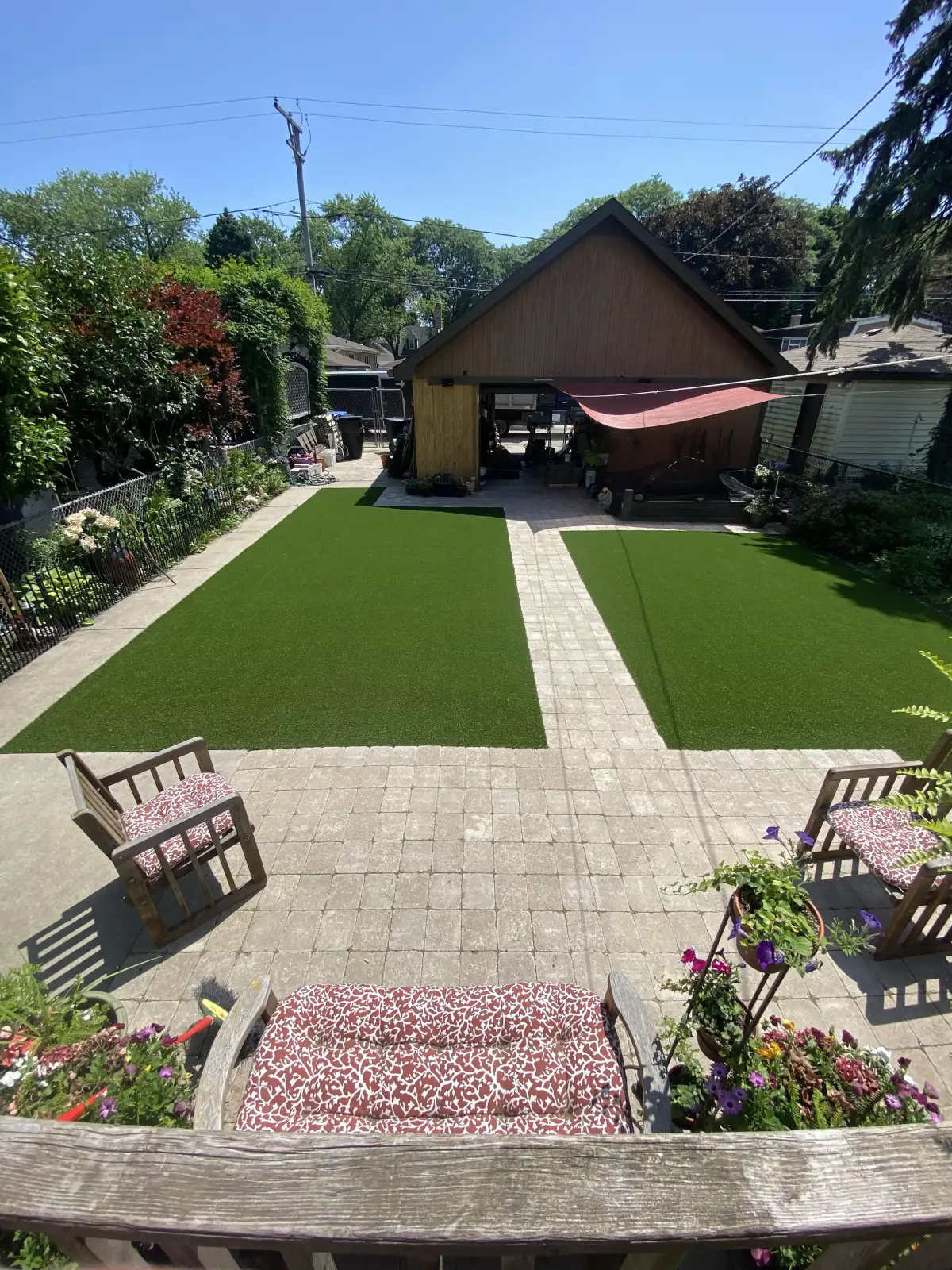
Why Our Installation Method Matters
The single biggest factor in artificial turf longevity is what sits underneath it. Too many installers skip the drainage stone base entirely, compacting native soil and laying turf directly on top. That approach works for about one Michigan winter before the freeze-thaw cycles create an uneven, poorly draining surface.
Drainage Stone Base vs. Compacted Soil
Michigan soil is heavy with clay in most regions. Clay expands when it freezes and contracts when it thaws -- 100 or more cycles per winter. Without a drainage stone base, your turf surface will develop waves, low spots that hold water, and edges that pull away from perimeter boards. Our drainage stone base eliminates ground movement by providing a stable, non-expanding substrate that drains water instead of trapping it.
Framed Edge System
We install solid perimeter boards around every project, creating a rigid frame that holds the turf in place permanently. The turf is secured to these boards using 2-inch perimeter screws with built-in washers -- not landscape spikes or staples that pull out over time. This is the same edging method used on commercial sports fields because it works.
Commercial-Grade Seaming
Seams are the weak point of any turf installation. We use 12-inch seaming tape with two-part polyurethane adhesive -- the same materials used on athletic fields. Every seam is hand-stitched to align fiber direction and pattern, creating invisible joints that will not separate.
Where Artificial Turf Works Best
From residential yards to commercial properties, artificial turf delivers consistent performance in applications where natural grass struggles or requires excessive maintenance.
Residential Lawns
Eliminate mowing, watering, and fertilizing. A lush green lawn every day of the year, including through Michigan's snow season. See our Michigan turf cost guide for detailed pricing.
Pet Areas
Antimicrobial infill, superior drainage, and durable fibers that withstand daily use. No mud, no dead spots, no digging damage. Learn more about our pet turf installation options.
Sports Fields
Consistent playing surfaces for backyard sports, practice areas, and recreational fields. Built with shock-absorbing padding for safety.
Commercial Properties
Reduce grounds maintenance costs while maintaining a professional appearance. Ideal for office complexes, retail storefronts, and HOA common areas.
Recent Turf Installations
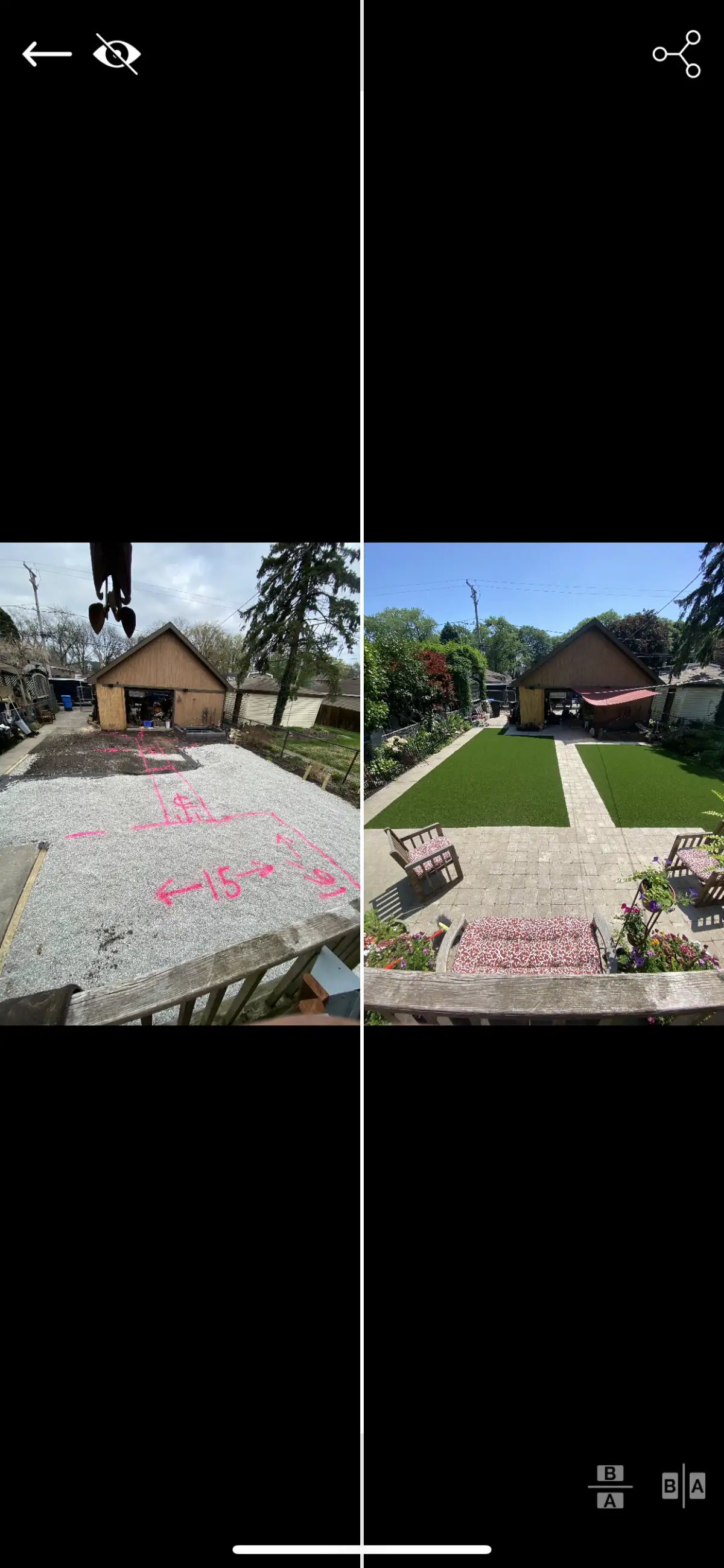
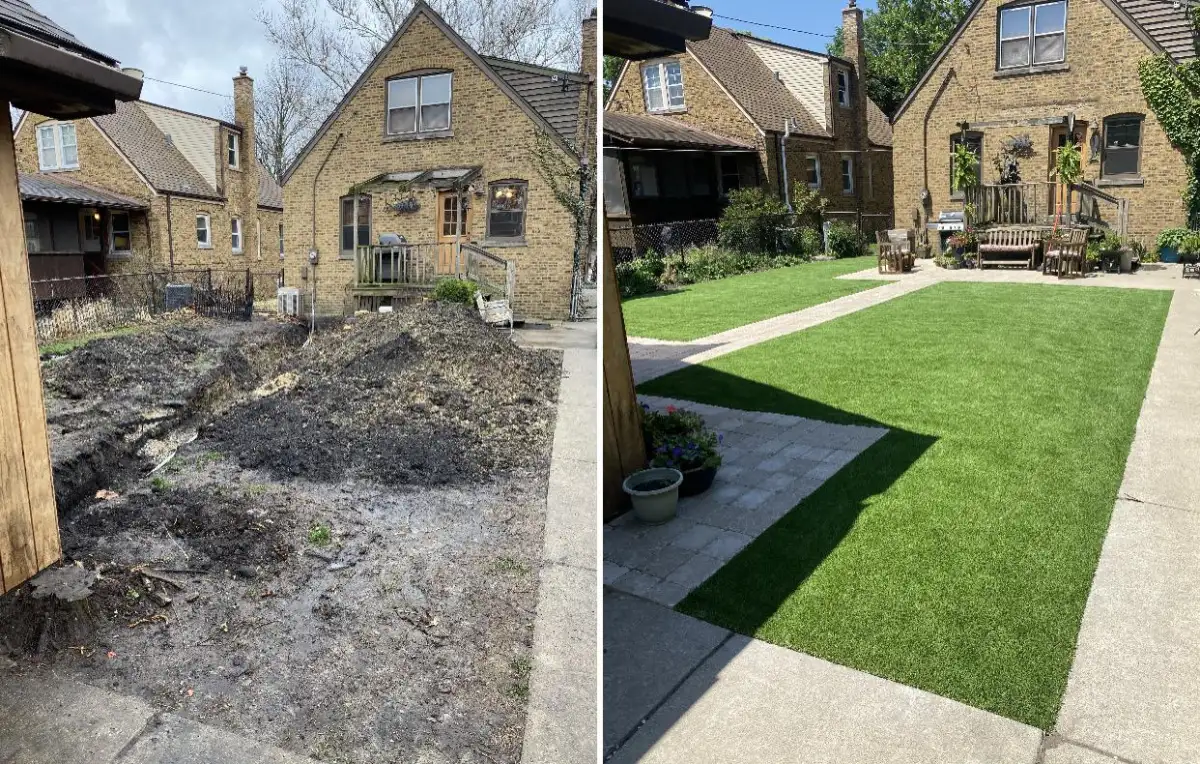
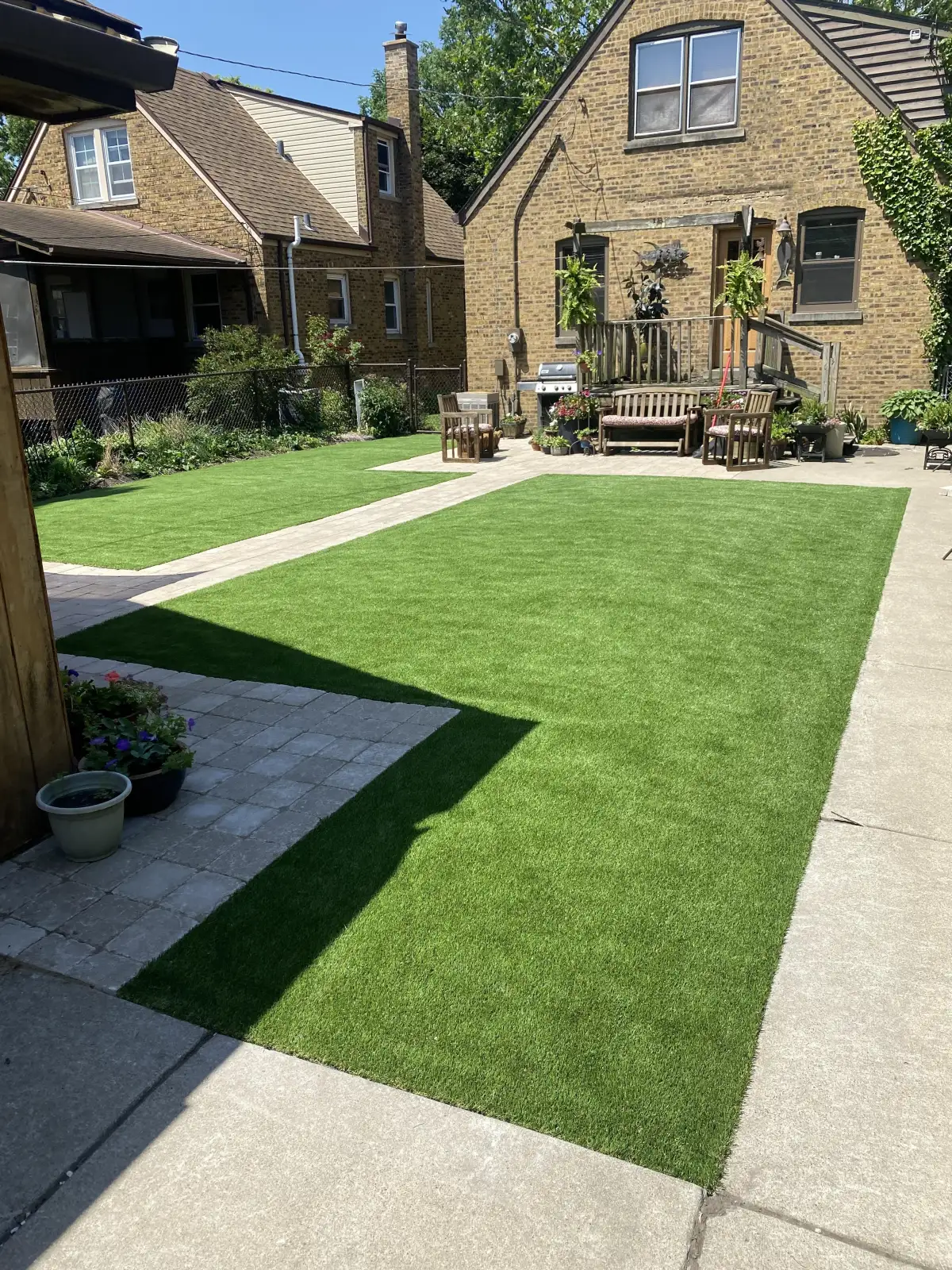
Real projects completed by Great Lakes Synthetic Turf across Michigan.
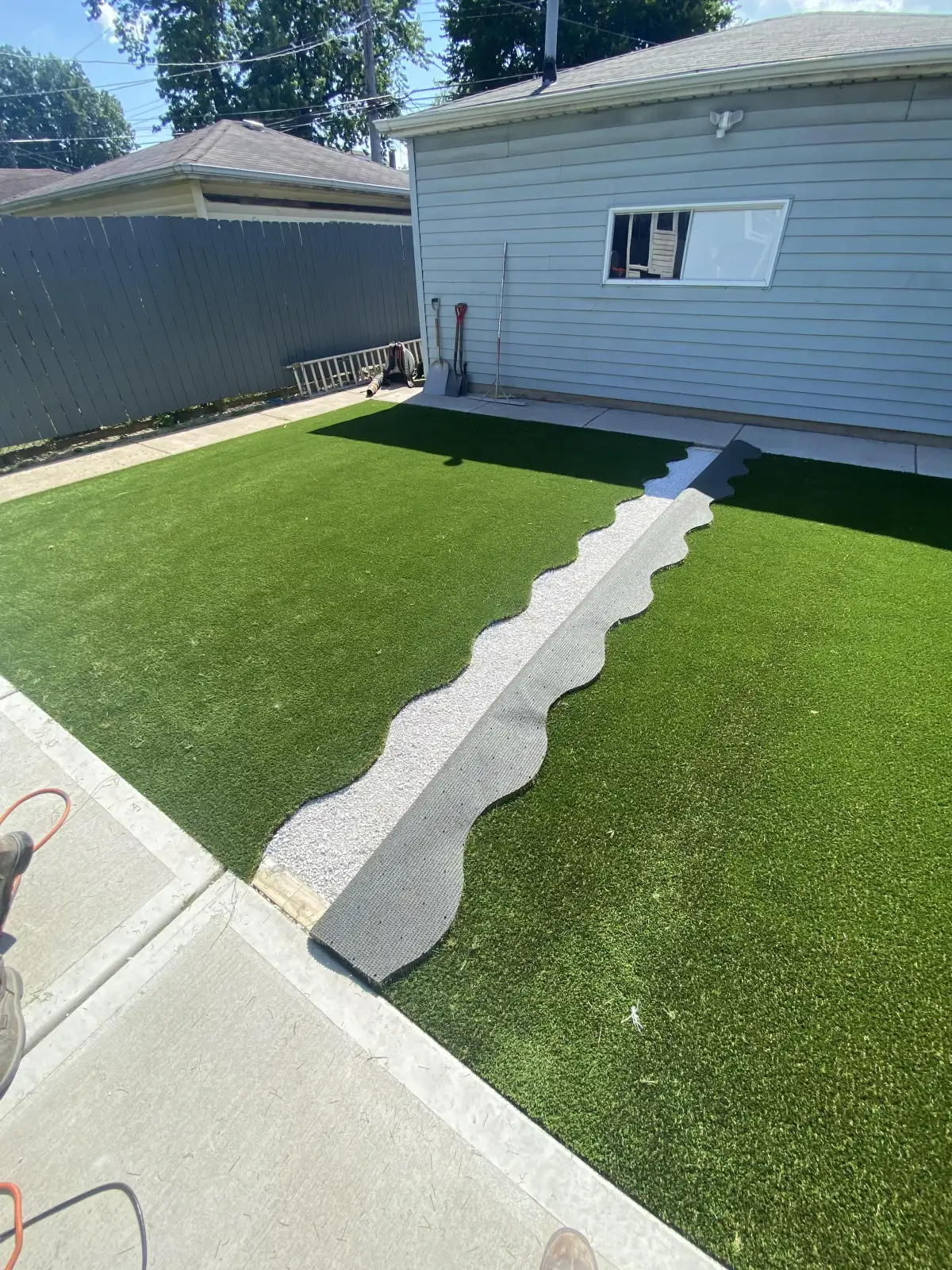
Artificial Turf Maintenance in Michigan
One of the primary advantages of artificial turf is the dramatic reduction in maintenance compared to natural grass. Michigan homeowners spend an average of $1,200 to $2,500 per year on lawn care including mowing, fertilizing, irrigation, and weed control. Artificial turf eliminates virtually all of that ongoing expense.
Routine Care
Routine maintenance for artificial turf is minimal. A leaf blower clears debris from the surface in minutes. For pet areas, solid waste is picked up and the area is rinsed with a garden hose -- the antimicrobial infill neutralizes odors and the drainage stone base channels liquid away from the surface. Brushing high-traffic areas with a stiff-bristle broom every few months keeps the turf fibers standing upright and looking natural. That is the full extent of routine maintenance -- no mowing, no watering, no fertilizing, no aerating, and no re-seeding.
Michigan Winter Care
Snow sitting on artificial turf will not damage the product. You can leave it to melt naturally, or clear it with a plastic shovel or snow blower. Do not use metal-edged snow shovels directly on the turf surface. Ice melt products containing calcium chloride are safe for use on artificial turf -- avoid rock salt, which can leave residue. After the snow melts in spring, a quick brushing and rinse restores the turf to its pre-winter appearance. The drainage stone base prevents any water from pooling during the snowmelt period, which is a major advantage over natural grass that often turns into a mud pit during Michigan's March thaw.
Long-Term Performance
Modern American-made artificial turf products are engineered to withstand 15 to 20 years of continuous outdoor exposure in Michigan's climate. UV stabilizers prevent fading and fiber degradation from sun exposure. The drainage stone base prevents frost heave from distorting the surface. And the framed edge system keeps perimeter tension consistent through seasonal ground movement. We recommend a professional infill top-up every 3 to 5 years to replace any material that has compacted or migrated, and a seam inspection at the same interval. These minor touch-ups extend the life of your installation well beyond the manufacturer warranty period.
Cost Comparison: Turf vs. Natural Grass Over 10 Years
A 500-square-foot natural lawn in Michigan costs approximately $200 to $400 per year in mowing, $100 to $200 in fertilizer and weed control, $50 to $150 in watering, and $100 to $200 in seasonal repair and re-seeding. Over 10 years, that is $4,500 to $9,500 in maintenance costs alone -- not counting the 400 to 600 hours of personal time spent mowing, edging, and treating the lawn. A 500-square-foot artificial turf installation at $13 to $15 per square foot costs $6,500 to $7,500 upfront with near-zero ongoing maintenance costs. By year 5, the total cost of ownership is comparable. By year 10, artificial turf has saved thousands of dollars and hundreds of hours. Learn more in our detailed Michigan turf cost guide and our turf vs. natural grass comparison.
Artificial Turf Installation by Michigan Area
Michigan properties vary in drainage, soil, access, shade, and daily use. Compare the conditions that apply to your property before requesting an artificial turf installation quote.
Kalamazoo Artificial Turf
Drainage-first installation planning for Kalamazoo lawns, pet areas, side yards, and putting greens.
Benton Harbor
Southwest Michigan lakeshore planning for turf, drainage, pets, and outdoor living surfaces.
Benton Harbor Booking Questions
Drainage, base prep, access, pet turf, putting greens, and cost questions to ask before approving an estimate.
Grand Rapids
West Michigan turf installation planning for residential and commercial properties.
All Service Areas
Find Michigan communities served by Great Lakes Synthetic Turf.
Artificial Turf Installation FAQ
With proper installation -- including a drainage stone base and framed edge system -- artificial turf in Michigan lasts 15 to 20 years. The key factors are UV-stabilized fibers that resist fading, a base system that prevents frost heave damage, and commercial-grade seaming that holds through freeze-thaw cycles. Our American-made turf products carry manufacturer warranties of 15 years or more.
Professional artificial turf installation in Michigan typically costs between $13 and $15 per square foot, depending on the turf grade selected, project size, accessibility, and base preparation requirements. A typical 500-square-foot backyard project runs between $6,500 and $7,500 fully installed. We provide free on-site estimates with exact pricing based on your specific project.
Yes. Our turf products drain at over 30 inches per hour -- significantly faster than natural grass. Combined with our drainage stone base, water passes through the turf surface, through the base material, and into the subgrade without pooling. This is especially important in Michigan, where heavy spring rains and snowmelt can overwhelm poorly drained surfaces.
Absolutely. Our installations are specifically engineered for Michigan's winter conditions. Snow can be left to melt naturally or removed with a plastic shovel or leaf blower. The turf fibers are unaffected by ice and snow, and because there is no organic material in the system, there is no frost heave -- the drainage stone base and framed edges keep everything stable through 100-plus freeze-thaw cycles per season.
Most residential installations take 2 to 4 days, depending on project size and site conditions. Excavation and base preparation account for about 60% of the total installation time -- this is the part we never rush. A typical 500-square-foot backyard project takes 2 to 3 days. Larger or more complex projects may require 4 to 5 days. Spring is the best time to schedule your installation for ideal ground conditions and full summer enjoyment.
Yes. The turf products we install are non-toxic, lead-free, and tested to meet ASTM safety standards. Unlike natural lawns that require chemical pesticides, herbicides, and fertilizers, artificial turf needs no chemical treatments at all. The infill materials we use -- either kiln-dried silica sand or antimicrobial options -- are inert and safe for direct skin contact. For play areas, we can add a shock-absorbing pad beneath the turf that meets fall-height safety standards for playground equipment, providing cushioning that reduces injury risk.
Yes. We install turf on slopes, hillsides, and uneven terrain regularly. Proper grading and base preparation are even more critical on slopes to prevent erosion and ensure drainage flows in the right direction. We use additional anchoring methods on steep grades and may incorporate retaining walls or terracing for slopes that exceed a certain pitch. In fact, artificial turf is often an excellent solution for steep hillsides where natural grass is difficult to mow and maintain. The turf stabilizes the surface while the drainage stone base channels water properly instead of allowing runoff to erode the slope.
Ready to Eliminate Lawn Maintenance?
Get a free on-site estimate for your artificial turf installation. We will assess your property, discuss turf options, and provide exact pricing -- no obligation, no pressure.