
Why Spring Is the Best Time to Install Artificial Turf in Michigan
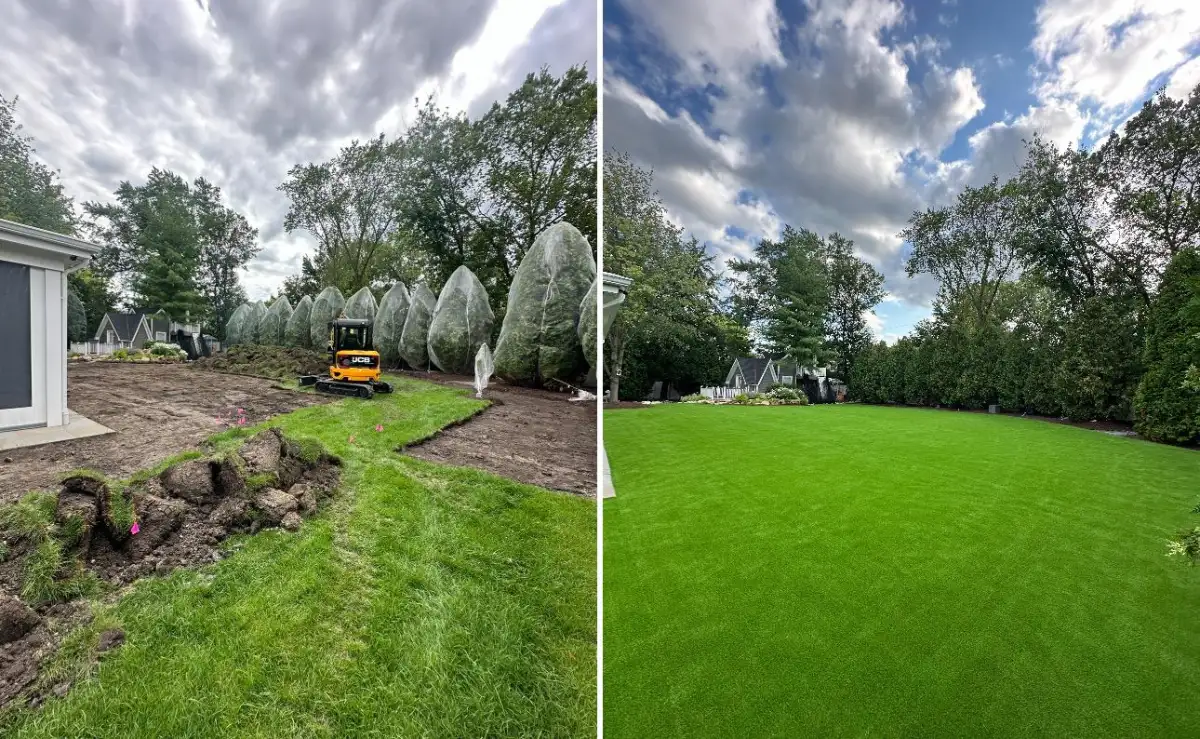
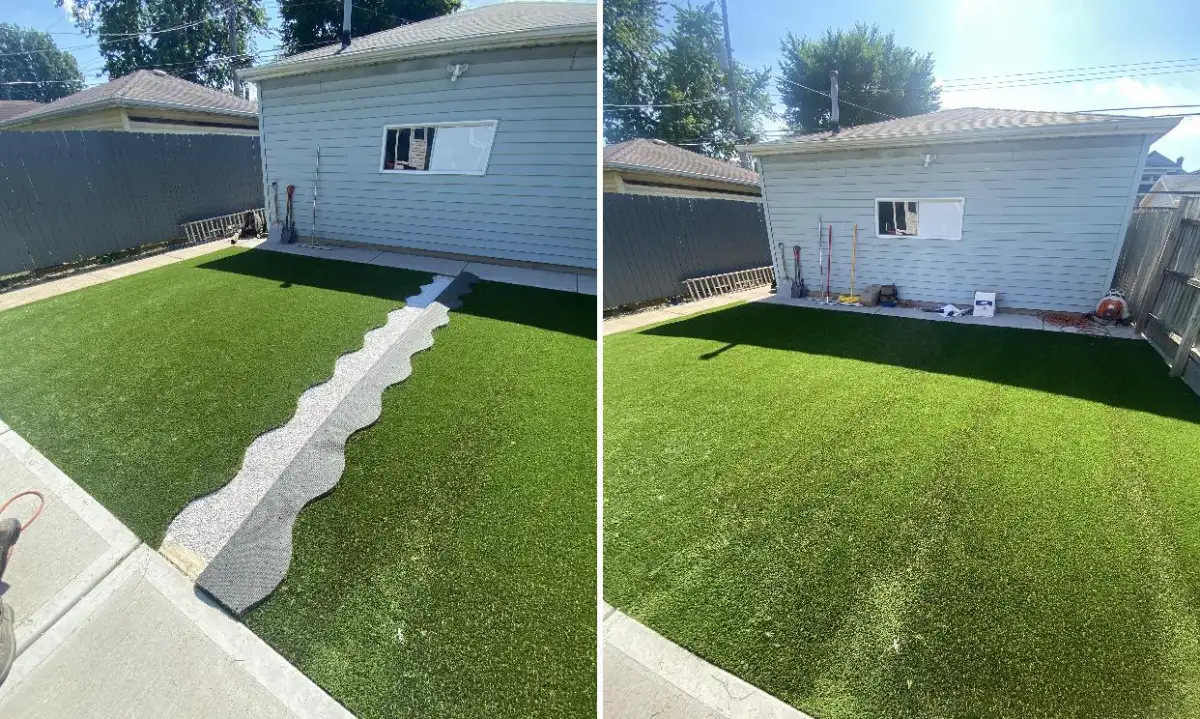
Late April through mid-June is the ideal window for artificial turf installation in Michigan because the ground has thawed completely, spring rains have settled the soil, and you get the full summer season to enjoy your new yard. Wait until late summer and you are racing against fall rains and early frost. Wait until next spring and you spend another year mowing, watering, and dealing with mud.
This guide explains why the spring installation window matters so much in Michigan specifically, what ground and weather conditions make it ideal, and how to plan your project so it is finished before the first backyard barbecue of the season.
Michigan's Spring Ground Conditions Are Ideal for Turf Installation
Every artificial turf installation starts below the surface. The quality of the excavation, base compaction, and drainage work determines whether the turf lasts 5 years or 20 years. And ground conditions directly affect all three.
The Frost Is Out, but the Ground Is Still Workable
By mid-April in southern Michigan and early May in northern areas like Traverse City and Petoskey, the frost line has retreated below the excavation depth for turf installation (typically 4 to 6 inches). The soil is thawed but has not yet hardened and dried out the way it does in July and August.
This matters because excavation in soft spring soil is faster, cleaner, and easier on equipment than digging through baked clay in August. Michigan's clay-heavy soils -- common across the Grand Rapids, Lansing, and Detroit metro areas -- become extremely hard when they dry out in summer heat. That means more machine hours, more fuel, and potentially higher costs for late-season installations.
Spring Moisture Helps Base Compaction
The drainage stone base that goes under every turf installation needs to be compacted in layers, with each layer moistened before running the plate compactor over it. In spring, the natural soil moisture content is close to optimal for compaction. The base material bonds better and compacts more uniformly when there is some moisture present.
In contrast, installing during a dry July or August often means trucking in water to wet down each base layer. It is not a dealbreaker, but it adds time and logistics to the project. Spring gives you ideal compaction conditions without the extra effort.
Full Summer Enjoyment -- No Wasted Months
This is the most straightforward reason to install in spring, and it is the one most Michigan homeowners care about most. A turf installation completed in May gives you June, July, August, and September to use the space. That is four full months of cookouts, kids playing, dogs running, and evenings outside.
A typical residential turf installation takes 3 to 5 days from excavation to finished surface. A larger project with putting greens, hardscaping, or drainage work might take 1 to 2 weeks. Either way, booking in April or May means the project is done before Memorial Day weekend in most cases.
Compare that to a September installation. The turf looks great for a few weeks, then the leaves fall, the snow comes, and you do not really get to enjoy the investment until the following spring. You have paid full price for a project you will not use for six months.
Drainage Testing Happens Naturally
One of the less obvious advantages of spring installation is that Michigan's spring rains serve as a free, thorough drainage test. A turf system installed in May will experience several good rainstorms in June and July. If there is any issue with the drainage system -- a low spot, a slow-draining area, a grading inconsistency -- it shows up while the ground is still warm and corrections are simple.
An installation done in October might not get a real drainage test until spring snowmelt the following March. By then, any problems have been sitting under snow for months, and fixing them means working in cold, wet conditions.
At Great Lakes Synthetic Turf, we build every installation with a proper drainage stone base specifically because Michigan's water table is high and our rainfall is heavy. But even the best drainage work benefits from early real-world testing, and spring installations get that automatically.
Scheduling Availability Is Better in Spring
The turf installation industry in Michigan follows a predictable seasonal curve. Demand ramps up in June, peaks in July and August, and tapers off in September. By midsummer, most reputable installers are booked 4 to 6 weeks out.
Booking your project for April or May means shorter wait times, more flexibility with scheduling, and in many cases, the ability to pick your preferred start date rather than taking whatever slot is available. This is especially true for larger projects that require multiple days on site.
It also means your installation crew is not rushing between jobs during the peak-season crunch. Earlier in the season, crews can give each project the time and attention it deserves without the pressure of three more jobs waiting in the queue.
Season-by-Season Comparison for Michigan Turf Installation
While spring is the clear winner, here is how every season stacks up for artificial turf installation in Michigan:
Spring (April -- June): Best Overall
- Ground is thawed and workable
- Natural moisture aids compaction
- Full summer of use ahead
- Better scheduling availability
- Spring rains test drainage naturally
Summer (July -- August): Good but Busy
- Ground is dry and hard (especially clay soils)
- Peak demand means longer wait times
- Heat can be tough on crews, potentially slowing work
- Still several months of enjoyment before winter
- May need to water base layers for compaction
Fall (September -- October): Acceptable with Caveats
- Ground conditions are generally good
- Cooler temperatures are comfortable for crews
- Limited enjoyment before winter arrives
- Risk of early frost in northern Michigan delaying completion
- No natural drainage testing until spring
Winter (November -- March): Not Recommended
- Frozen ground makes excavation difficult or impossible
- Snow and ice prevent proper base compaction
- Turf adhesives and seaming materials do not cure properly below 40 degrees Fahrenheit
- Most installers do not schedule winter projects in Michigan
What About Pet Turf? Same Timing Applies
Pet turf installations follow the same seasonal logic, with one additional reason to favor spring. Dogs that have been tracking mud through the house all winter and spring are the number one reason Michigan homeowners call about pet turf in the first place. Installing in May means you solve the mud problem before it gets worse through the summer thunderstorm season.
Pet turf also benefits from spring drainage testing even more than standard turf. The antimicrobial infill and enhanced drainage layers in a pet turf system need to work correctly from day one. Spring rains verify that urine and rainwater drain through the system quickly, which is essential for preventing odor and bacteria buildup during hot summer months.
How to Plan a Spring Turf Installation in Michigan
If you are considering artificial turf for your Michigan property, here is a practical timeline for a spring installation:
February -- March: Research and Get Estimates
Start by identifying the area you want to convert and getting a rough square footage measurement. Contact installers for estimates. At Great Lakes Synthetic Turf, we do free on-site consultations where we assess your site conditions, discuss turf options, and provide a detailed quote. Our cost guide gives you a realistic sense of pricing before you call.
March -- April: Finalize Design and Schedule
Once you have chosen an installer, finalize the design details: turf product selection, edge treatment, any additional features like putting greens or landscape lighting. Book your installation date. If you want a May completion, scheduling by early April is ideal.
April -- May: Installation
The installation itself is the shortest part of the process. Most residential projects take 3 to 5 days. Your installer handles excavation, drainage stone base, grading, edge system installation, turf laying, seaming, and infill. You do not need to be home during installation, but the on-site consultation and final walkthrough are important.
May -- June: Enjoy Your New Yard
No mowing. No watering. No fertilizer. No mud. Just a green, clean outdoor space that looks the same in July as it does in October. Your first summer on synthetic turf is when the value of the investment becomes obvious -- every hour you used to spend on lawn care is now free time.
Ready to Book Your Spring Installation?
We are currently scheduling spring and early summer installations across Michigan. Whether you are looking at a full lawn replacement, a pet turf area, a backyard putting green, or a complete outdoor living transformation, the process starts with a free on-site consultation.
We serve all of Michigan from our White Cloud headquarters -- Grand Rapids, Detroit, Traverse City, Kalamazoo, Lansing, Ann Arbor, Muskegon, Holland, and everywhere in between. Every installation uses our signature drainage stone base, framed edge system, and American-made turf products.