
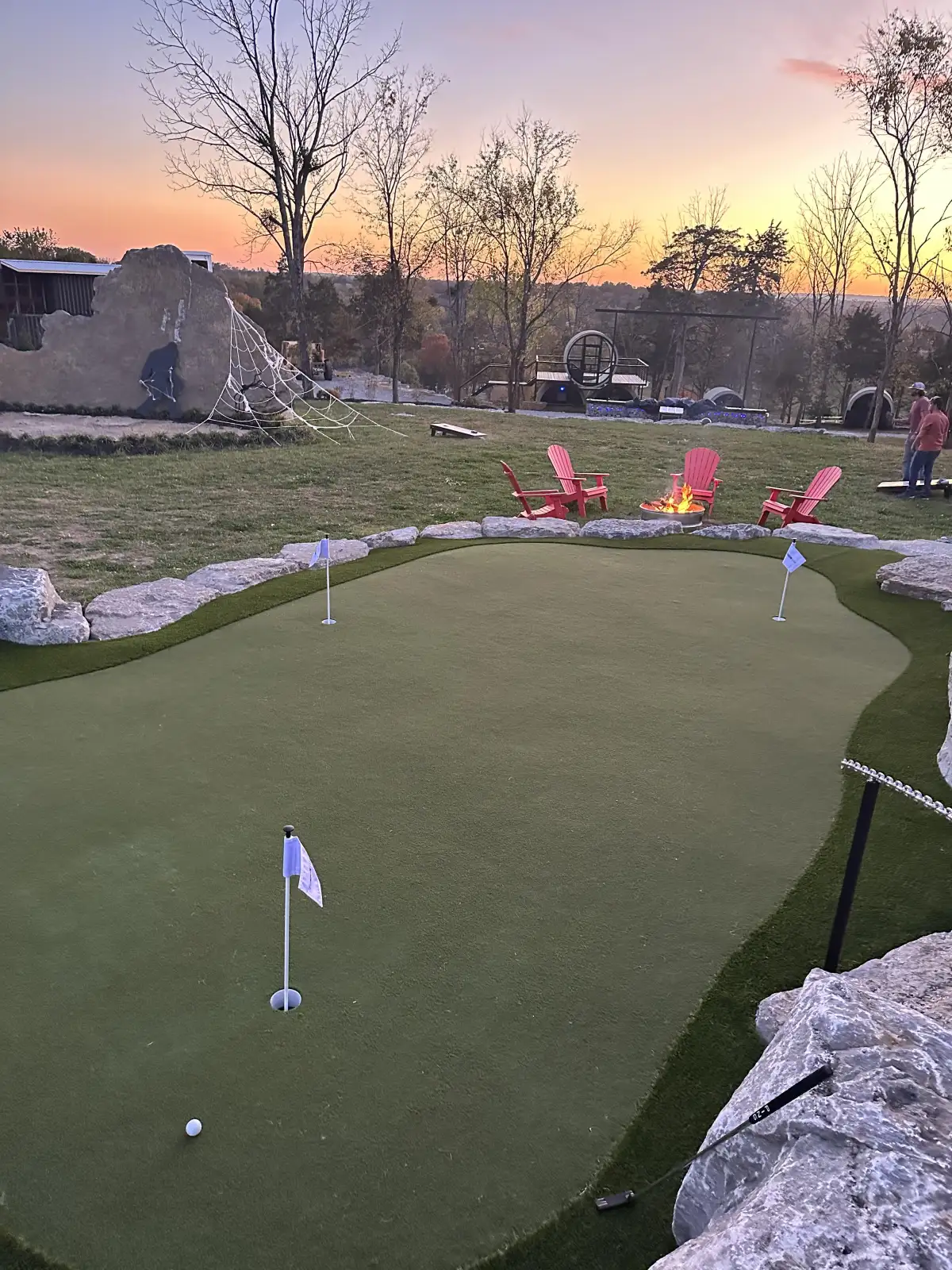
Custom Putting Green Installation in Michigan
A custom backyard putting green in Michigan typically ranges from $25 to $30 per square foot installed, with most residential greens costing between $7,500 and $18,000.
Practice Your Short Game Every Day
Michigan's golf season runs about five months -- from May through September if you are lucky. That leaves seven months where the only practice available is indoor simulators or driving ranges with heated bays. A backyard putting green changes that equation entirely.
Our custom putting greens use professional-grade nylon turf that replicates the speed, break, and feel of a well-maintained country club green. The surface plays at a true stimpmeter reading of 10 to 12, which means the ball rolls accurately and predictably -- no bouncing, no skipping, no dead spots that kill the roll.
Every green is custom-designed to fit your space and playing preferences. Whether you want a simple flat practice surface or a multi-contour green with undulations, chipping areas, fringe zones, and sand bunker edges, we build it to your specifications. Want to understand the full process? Read our complete guide to building a backyard putting green in Michigan.
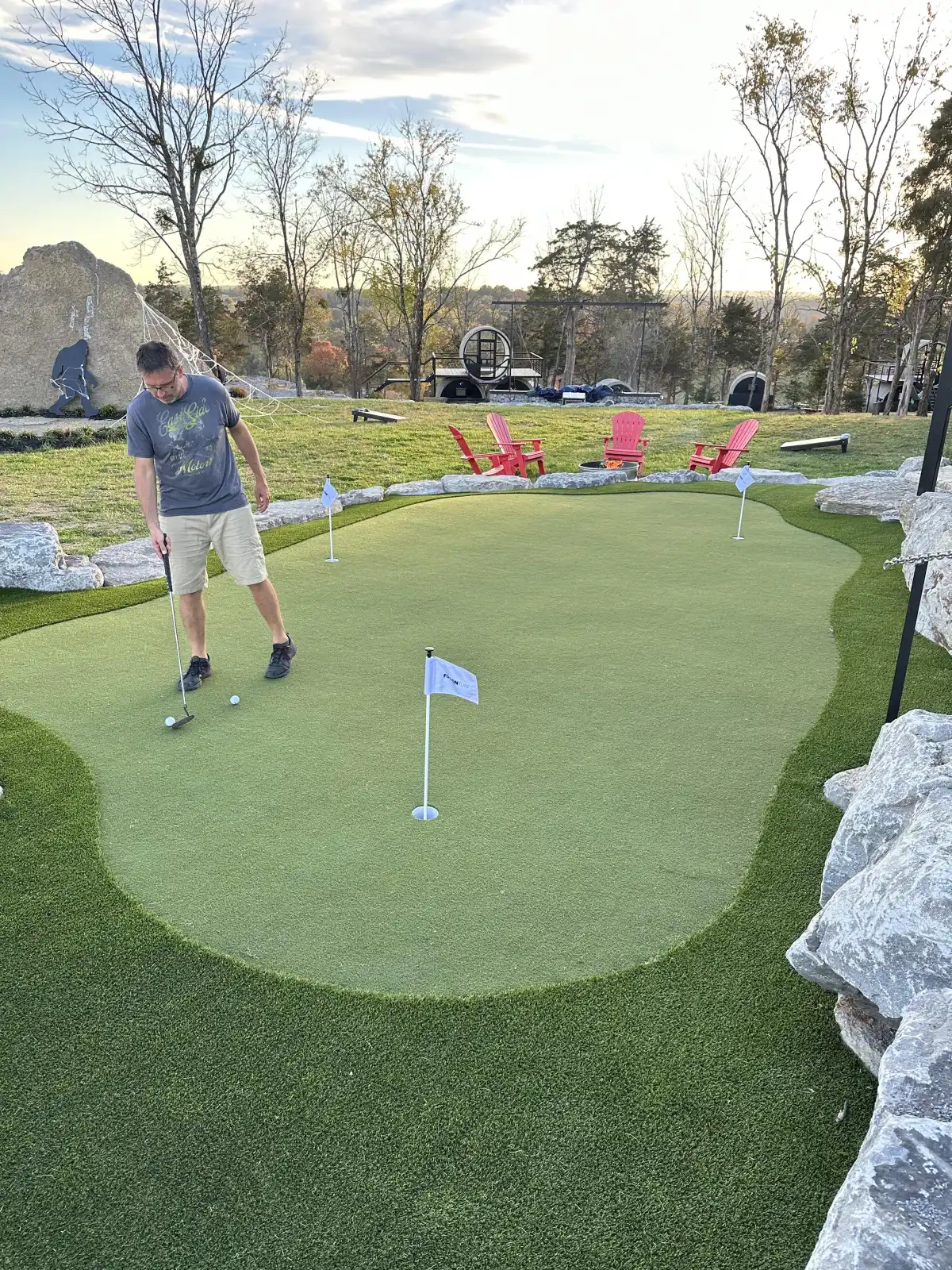
What Goes Into a Custom Putting Green
Every component is selected to deliver a playing surface that performs like the real thing -- not a decorative lawn that happens to be short.
True-Roll Surface
Dense nylon putting turf selected for consistent ball speed, clean roll, and realistic pace.
Custom Contours
Sculpted sub-base work creates realistic breaks, slopes, and multi-directional putts.
Chipping Areas
Fringe and approach turf add useful chipping practice without turning the yard into a course.
Cup Placement
Flush regulation cups and multiple positions keep practice varied from day to day.
Fringe Turf
Taller perimeter turf creates a natural-looking border around the putting surface.
Drainage System
A drainage stone base helps the surface shed rain quickly after Michigan storms.
From Concept to Completion
Our putting green design process ensures you get exactly the playing surface you want, built to last through Michigan's toughest conditions.
Consultation
We visit your property to assess the space, discuss your playing preferences, skill level, and design goals. We measure the area and identify the best location based on drainage, access, and aesthetics.
Custom Design
Based on your input, we create a detailed layout showing green shape, contour map, cup locations, fringe borders, and any additional features like chipping areas or bunker edges.
Installation
Excavation, drainage stone base, contour sculpting, turf installation, and cup placement. The sub-base is the critical phase -- this is where breaks and slopes are built into the green permanently.
Tuning
After installation, we test ball roll from every angle and adjust infill density to dial in the speed. We walk you through maintenance (minimal) and how to change cup positions for variety.
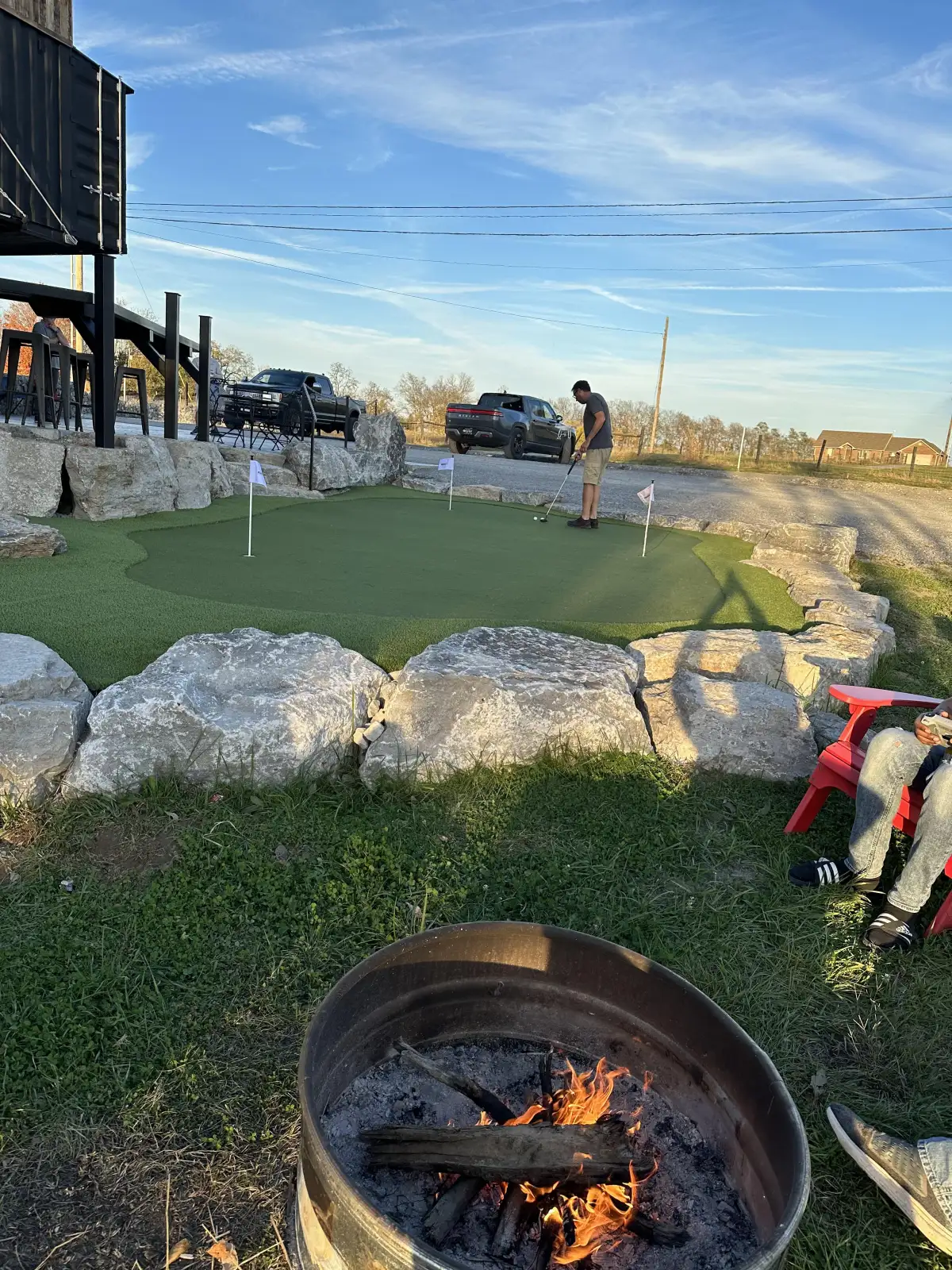
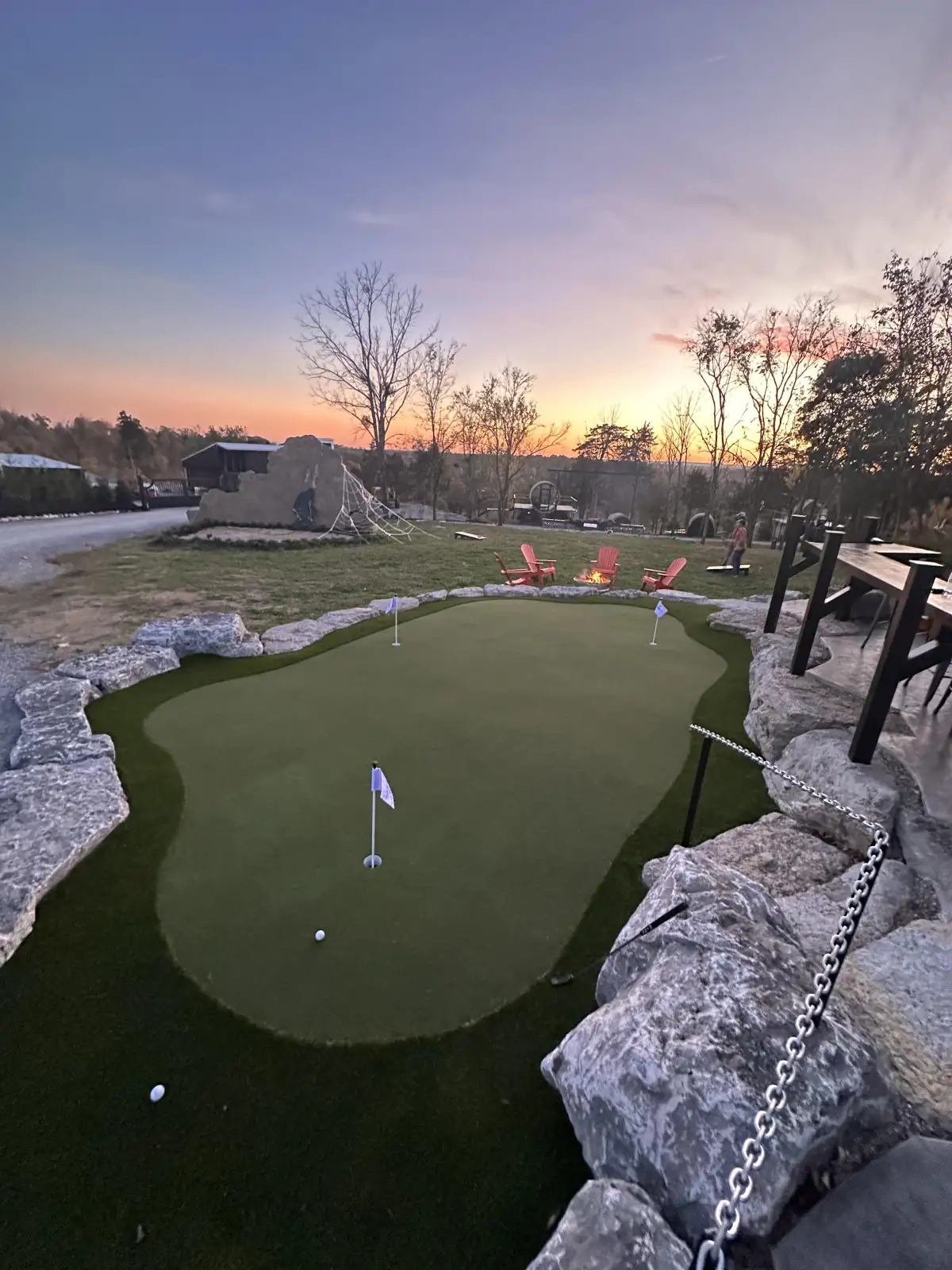
Custom Putting Green Projects
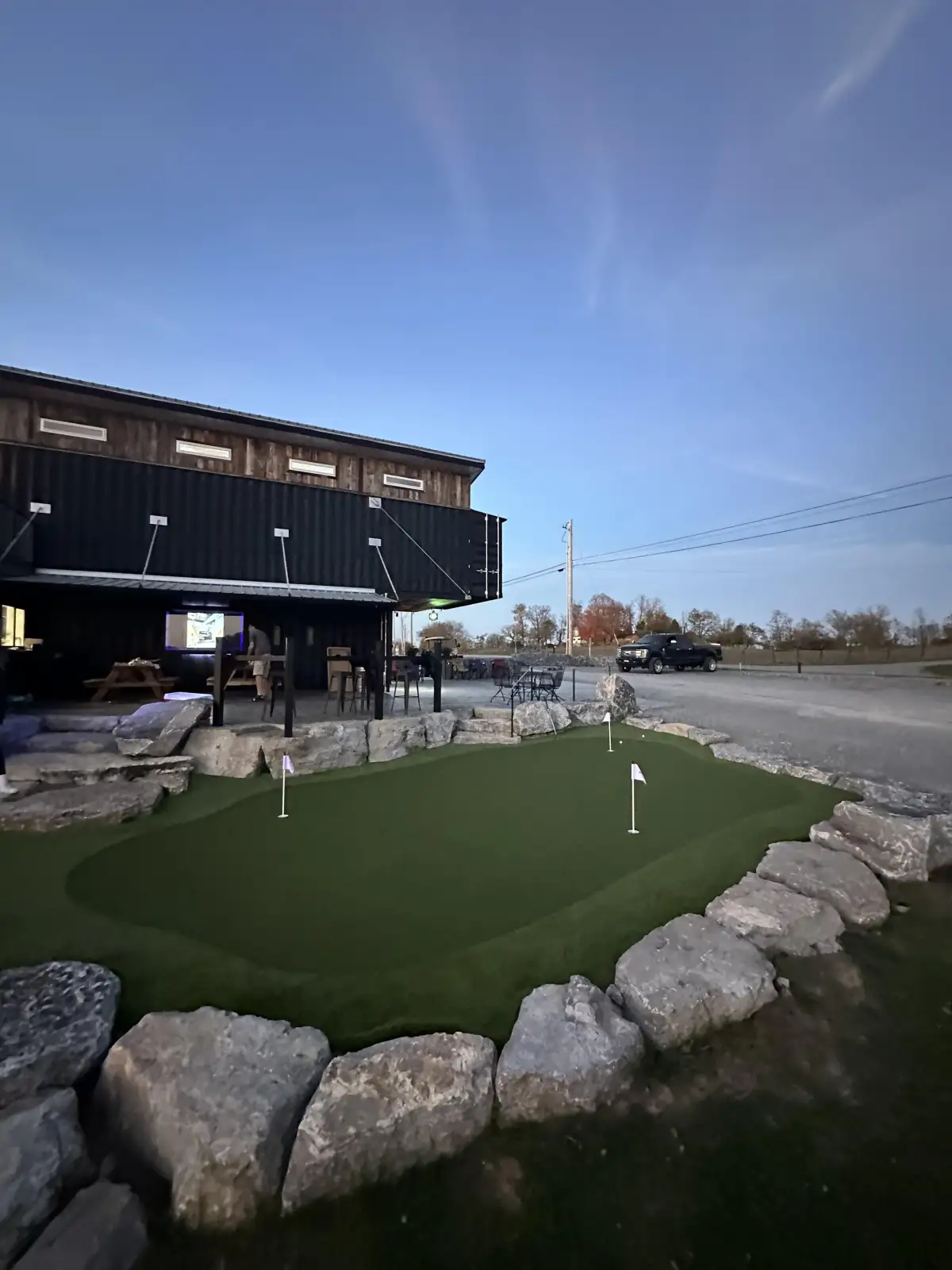
Backyard putting greens designed and installed by Great Lakes Synthetic Turf across Michigan.
Putting Green FAQ
Most residential putting greens range from 200 to 800 square feet. A 200-square-foot green provides enough room for a simple practice surface with 2 to 3 cups. A 500-square-foot green allows for multiple putting lines, subtle contours, and a small chipping area. Larger greens of 800 or more square feet can include full chipping zones, fringe borders, and complex multi-break contours. We design greens to fit your available space, whether that is a small side yard or a full backyard.
Yes. Once snow is cleared (a leaf blower or plastic shovel works well), the putting surface plays exactly the same as it does in summer. The nylon fibers are unaffected by cold temperatures, and the drainage stone base prevents frost heave from distorting the contours. Many of our clients specifically chose a putting green so they could practice during Michigan's long off-season.
Our putting greens play at a stimpmeter reading of 10 to 12, which is comparable to a well-maintained private club green. Municipal courses typically run at 8 to 9, and PGA Tour greens at 12 to 13. We can adjust the speed by varying infill density -- more infill slows the surface, less infill speeds it up. During your tuning session, we dial in the exact speed you prefer.
Very little. Brush the surface once a month with a stiff-bristle broom to keep fibers upright and distribute infill evenly. Remove leaves and debris as needed -- a leaf blower works well. That is it. No mowing, no watering, no rolling, no aerating, no top-dressing. The surface maintains its speed and consistency year after year with minimal attention.
Residential and Commercial Putting Green Projects
Custom putting greens serve different purposes depending on the setting. We design each installation around the specific use case and traffic level.
Residential Putting Green Installation
Most residential putting green projects in Michigan fall into two categories. The first is a dedicated practice green for golfers who want to improve their short game without driving to a course. These greens typically feature 4 to 6 cup positions, realistic contours with 2 to 4 percent slope variations, and a chipping apron that allows approach shots from 10 to 30 yards out. Golfers who practice 20 minutes per day on a properly contoured home green typically see measurable improvement in putting accuracy within 4 to 6 weeks.
The second category is an entertainment green designed as a centerpiece of an outdoor living space. These installations prioritize visual impact and social play over tournament-level precision. They often include landscape lighting around the green for evening use, paver walkways connecting the green to a patio or fire pit, and a wider fringe area that creates a manicured park-like setting for gatherings.
Commercial Putting Green Installations
Restaurants, breweries, event venues, and resorts across Michigan are adding putting greens as guest amenities. A 600- to 1,200-square-foot green near a patio or dining area gives guests an activity that extends their visit time and increases per-visit spending. The Traverse City wine country region, Grand Rapids brewery district, and northern Michigan resort communities are seeing growing demand for these installations.
Commercial putting greens require heavier base construction to withstand higher traffic volume and less predictable use patterns. We use commercial-grade nylon turf rated for 50,000 or more foot-traffic cycles per year and increase the base depth to 6 inches minimum. The infill density is calibrated for moderate speed since commercial greens serve players of all skill levels, from experienced golfers to first-time putters. HOA communities and country clubs also commission practice greens for common areas, giving residents a shared amenity that requires no maintenance from the homeowners' association beyond occasional debris removal.
Why Michigan Putting Greens Need Proper Base Work
A putting green in Arizona can sit on 2 inches of compacted decomposed granite and perform well for decades. That same construction in Michigan will fail within two winters. The difference is entirely about what happens below the turf surface when temperatures cycle between 20 degrees and 40 degrees Fahrenheit dozens of times between November and March.
Each freeze-thaw cycle drives moisture upward through a process called frost heave. Water in the soil expands as it freezes, pushing the ground surface up by fractions of an inch. When it thaws, the surface settles back -- but not always to the same position. Over the course of a Michigan winter, these micro-movements accumulate into visible bumps, dips, and surface distortions that ruin the precision a putting green requires.
A 4- to 6-inch compacted drainage stone base solves this by creating a non-frost-susceptible layer between the soil and the turf surface. Clean crushed stone does not retain water the way soil does, so there is no moisture available to freeze and expand. The stone layer also distributes point loads evenly, preventing localized settling under cup sleeves and high-traffic areas near the green's edge. This is the same engineering principle used in Michigan road construction -- and it is the reason our putting greens maintain true ball roll year after year while improperly built greens develop the waviness that makes accurate putting impossible.
Design Your Custom Putting Green
Schedule a free design consultation to explore your options. We will visit your property, discuss your vision, and create a custom layout with exact pricing. Explore our turf cost guide for general pricing information.