What a Durable Artificial Turf Installation Requires in Michigan
A durable installation starts with the actual Michigan property, not just a turf sample. Great Lakes Synthetic Turf reviews grade, soil conditions, runoff, downspouts, low spots, gate access, pet traffic, shade, and nearby hardscape before recommending the turf product, aggregate base, edge system, and infill.
The installation scope can include removing grass and other organic material, shaping the subbase, placing and compacting drainage stone, securing the perimeter, fitting and seaming the turf, adding infill, and grooming the surface. A shaded side yard, dog run, putting green, pool surround, commercial space, and full lawn replacement each call for different preparation and finish details.
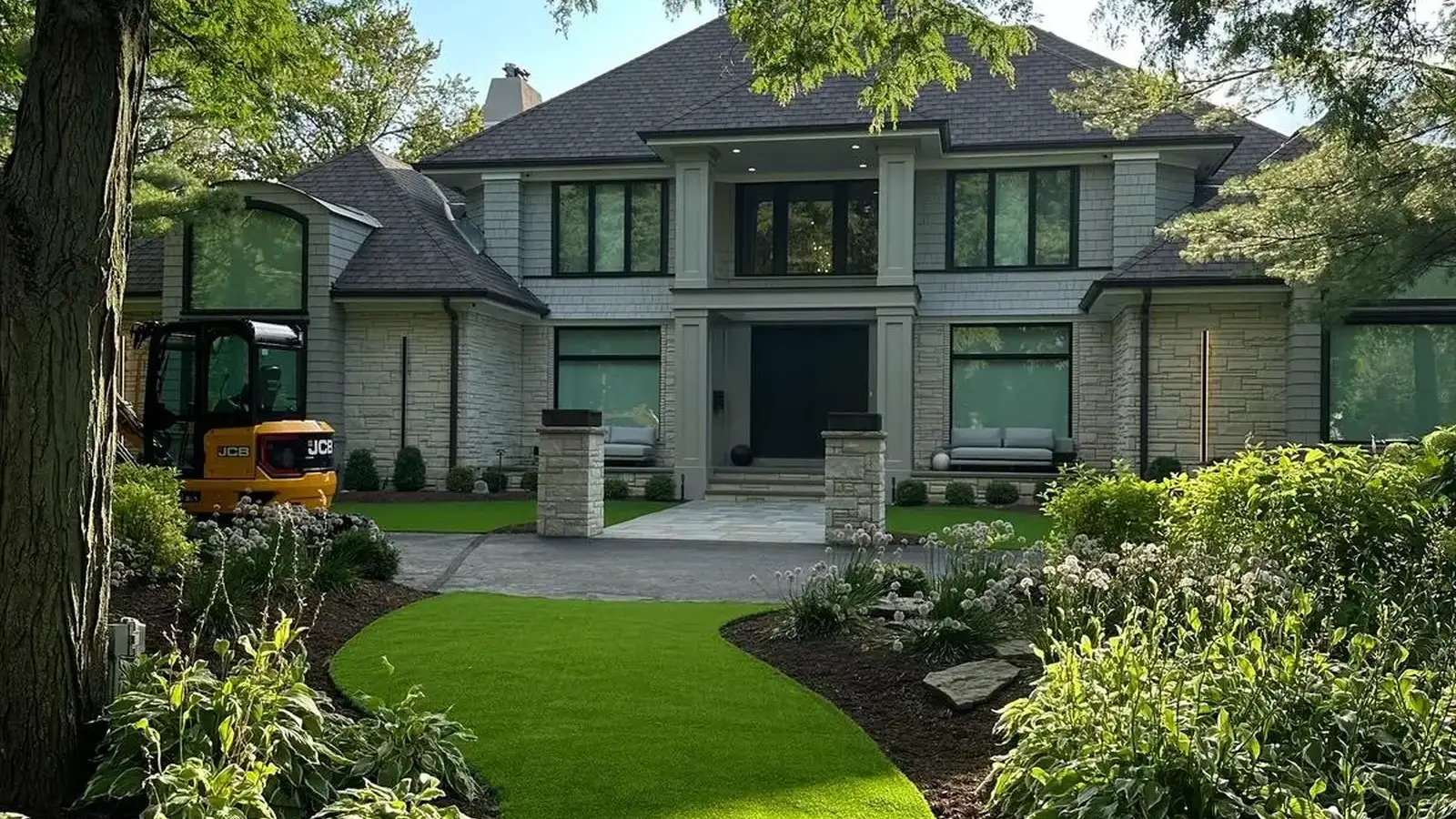
Some property owners call the surface artificial turf, synthetic turf, or artificial grass. Whatever the term, the finished system still needs to manage water, hold clean transitions, and match the daily use of the space.
That site-by-site planning matters across Michigan. For projects around Grand Rapids, East Grand Rapids, Walker, Wyoming, Lansing, and Ann Arbor, the estimate should account for grade, runoff, snowmelt, equipment access, and seasonal ground movement instead of treating every property the same.
What Belongs in the Installation Scope
- Excavation, grading, base depth, and aggregate compaction
- Drainage corrections around slopes, low spots, and downspouts
- Turf selection based on pets, foot traffic, golf, or lawn use
- Access for equipment, base stone, material staging, and haul-off
- Seams and transitions into patios, beds, fences, and walkways