
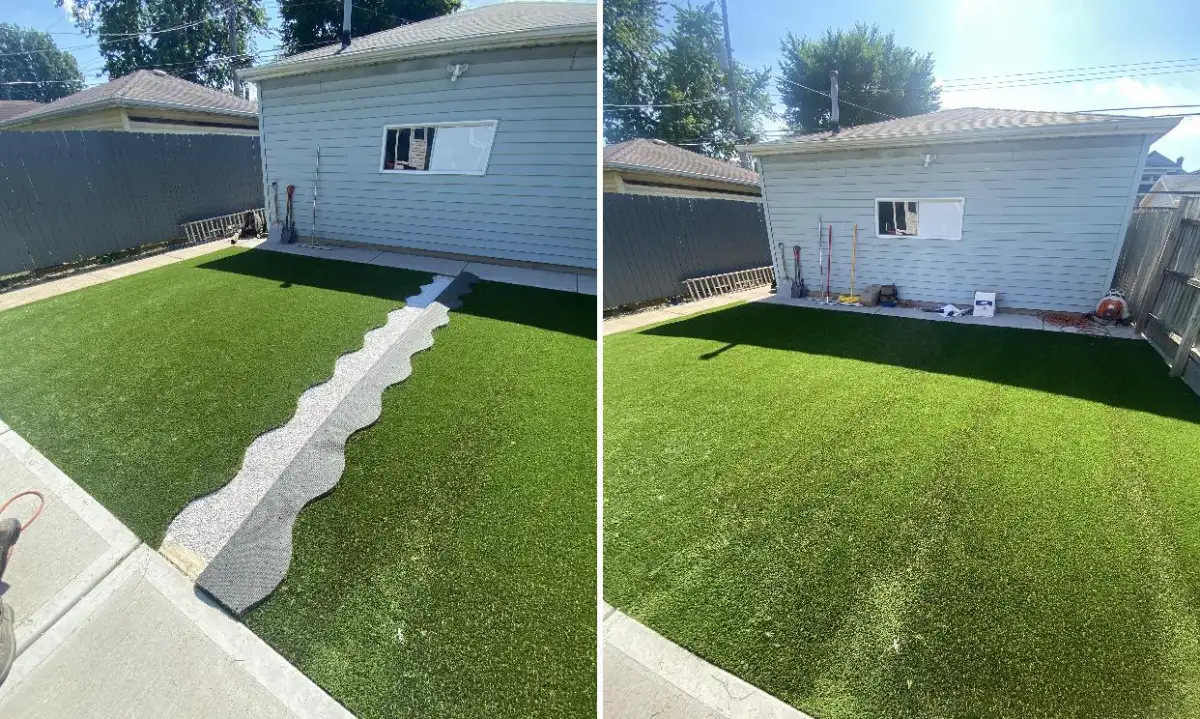
Artificial Turf vs Natural Grass in Michigan: Complete Comparison
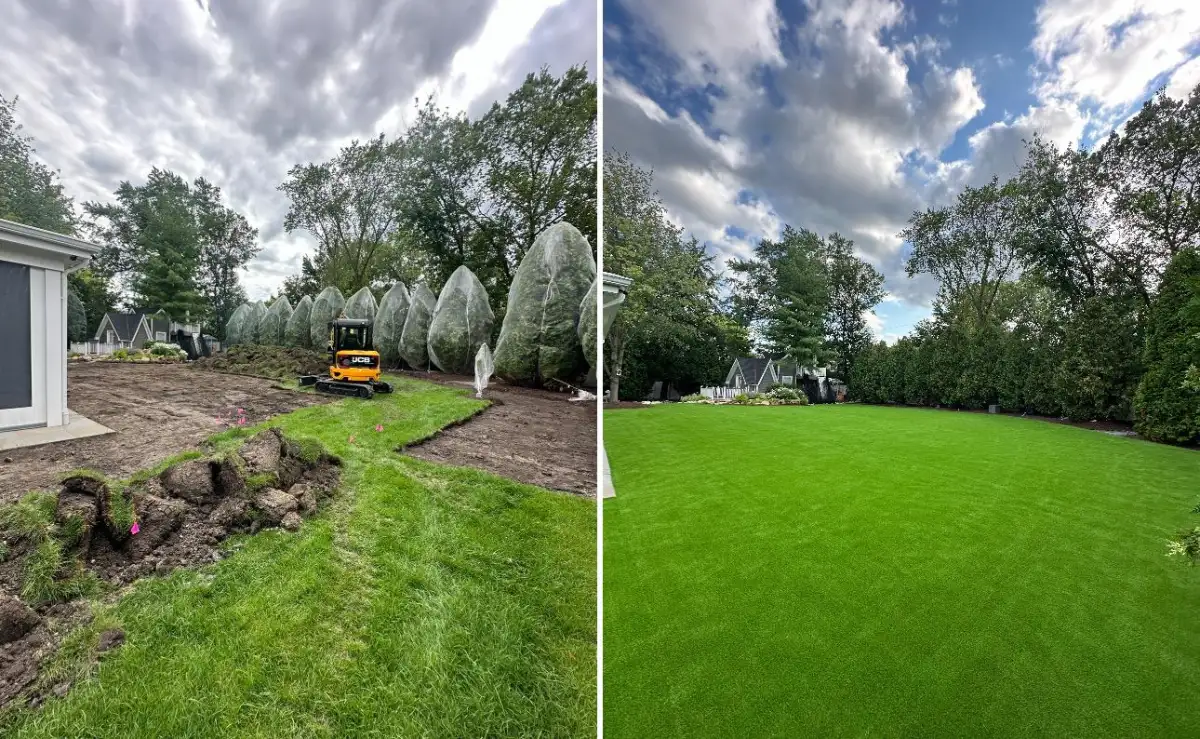
For Michigan homeowners, artificial turf eliminates 40 to 60 hours of annual lawn maintenance and saves an average of $1,200 to $2,400 per year in water, fertilizer, and mowing costs. But that does not mean artificial turf is the right choice for every situation. This guide compares both options across the factors that actually matter so you can make the decision that fits your property, budget, and lifestyle.
Upfront Cost Comparison
Natural grass sod costs $1 to $2 per square foot installed, making a 1,000-square-foot lawn a $1,000 to $2,000 project. Hydroseeding is even cheaper at $0.06 to $0.20 per square foot, though it takes 6 to 8 weeks to establish and requires careful watering during that period.
Artificial turf costs $13 to $15 per square foot installed, putting that same 1,000-square-foot area at $13,000 to $15,000. The higher upfront cost includes excavation, drainage stone base, framed edge system, the turf product itself, infill, and professional labor.
On initial price alone, natural grass wins by a wide margin. But installation cost is only the beginning of the story.
Annual Maintenance: Side-by-Side
| Maintenance Task | Natural Grass | Artificial Turf |
|---|---|---|
| Mowing | Weekly, April through October (28+ sessions) | Never |
| Watering | 1-1.5 inches per week during dry periods | Occasional rinse to remove dust |
| Fertilizing | 3-4 applications per year | Never |
| Weed Control | Pre-emergent + spot treatments | None (weed barrier prevents growth) |
| Aerating | Once or twice per year | Never |
| Overseeding | Annually for bare spots | Never |
| Snow Removal Impact | Salt damage, plow scarring, dead patches | No damage from snow or salt |
| Annual Cost | $1,350 - $2,300 | $25 - $50 |
| Annual Time | 40 - 60 hours | 2 - 4 hours |
At those rates, the cost difference between artificial turf and natural grass closes within 4 to 7 years. After that, artificial turf saves $1,300 to $2,250 every year for the remaining 10 to 15 years of its lifespan.
Durability and Lifespan
A professionally installed artificial turf system lasts 15 to 20 years before the fibers begin to show meaningful wear. The drainage stone base and framed edge system last indefinitely, so when the turf surface eventually needs replacement, the most expensive part of the project -- the base preparation -- is already done.
Natural grass is technically permanent, but it requires constant input to stay healthy. A Michigan lawn that goes unmaintained for even a single summer will develop bare patches, weed infestations, and soil compaction that take significant effort to correct. Lawns also suffer cumulative damage from salt, plows, foot traffic, pet use, and shade from growing trees.
Michigan Climate Considerations
Michigan's climate creates specific challenges for both options that homeowners in warmer states do not face.
Freeze-Thaw Cycles
Michigan experiences dozens of freeze-thaw cycles each winter, especially in the southern half of the state. Natural grass handles this well because soil is flexible. Artificial turf also handles it well -- but only if installed on a proper drainage stone base. Turf installed directly on compacted soil traps water underneath, which freezes and heaves the surface. This is the single most common reason for premature turf failure in Michigan, and it is entirely preventable with correct installation.
Lake-Effect Snow
West Michigan communities from Muskegon to Kalamazoo receive heavy lake-effect snow. Natural grass suffers from snow mold (a fungal disease that kills grass under heavy, persistent snow cover) and salt damage from road treatments tracked onto lawns. Artificial turf is immune to both. Snow melts off the turf and drains through the permeable surface without any damage to the fibers.
Short Growing Season
Michigan's growing season runs roughly May through September -- five months at best. Natural grass is brown and dormant for nearly half the year. Artificial turf stays green year-round, which matters for curb appeal, property value, and simple enjoyment of your outdoor space.
Environmental Impact
This is where the comparison gets nuanced. Natural grass produces oxygen, sequesters carbon, and supports soil ecosystems. Those are real environmental benefits. However, maintaining a natural lawn also has environmental costs that are often overlooked.
The EPA estimates that gas-powered lawn mowers contribute 5% of U.S. air pollution. A single mower running for one hour emits the same amount of volatile organic compounds as driving a car 350 miles. Lawn fertilizer runoff is a leading contributor to algal blooms in Michigan's lakes and rivers. And residential irrigation accounts for nearly 30% of household water consumption during summer months.
Artificial turf eliminates all of those impacts. It does not need mowing, fertilizing, or watering. The environmental trade-off is that synthetic turf is a petroleum-based product that will eventually need to be disposed of. Most modern turf products are recyclable, though recycling infrastructure is still developing.
Water Savings
A 1,000-square-foot natural lawn in Michigan needs approximately 620 gallons of water per week during dry periods to stay healthy. Over a typical summer, that adds up to 8,000 to 12,000 gallons of water.
Artificial turf requires zero irrigation. The only water it needs is an occasional rinse to wash away dust or pet waste -- roughly 50 to 100 gallons per year. For homeowners on well water (common in rural Michigan), this difference is especially significant because well pumps have limited capacity and draw from shared aquifers.
Pet and Family Considerations
Families with children and pets often find artificial turf more practical than natural grass for daily use. Pet turf with antimicrobial infill eliminates the mud that dogs track into the house, the dead patches from urine, and the parasites (fleas, ticks) that live in natural grass. Dogs can use the turf as a bathroom, and waste drains through the permeable surface when rinsed.
For children, artificial turf provides a consistent, level surface free of holes, rocks, and the pesticides and herbicides that natural lawns need to stay weed-free. It also dries faster after rain, so kids can play outside sooner after a storm.
Natural grass does have one advantage here: it is cooler to the touch in direct summer sun. Artificial turf can get warm on hot days, though modern products with heat-reducing technology are significantly cooler than older-generation turf. Shaded areas, which are common in Michigan yards with mature trees, eliminate this issue entirely.
Property Value Impact
Both well-maintained natural grass and professionally installed artificial turf add value to a home. The key word is "well-maintained." A natural lawn that looks patchy, weedy, or brown detracts from curb appeal. Artificial turf maintains its appearance year-round with minimal effort.
Real estate agents in Michigan report that homes with quality artificial turf installations attract buyers who value low-maintenance outdoor spaces. This is especially true for vacation homes, rental properties, and homes marketed to busy professionals. The growing trend toward water-conscious landscaping also makes artificial turf increasingly attractive to environmentally aware buyers.
When Natural Grass Makes More Sense
Natural grass is the better choice when:
- You genuinely enjoy lawn care and consider mowing, watering, and landscaping a hobby
- Your budget does not allow for the upfront cost of artificial turf and you are not concerned about long-term maintenance expenses
- The area is very large (multiple acres) where the per-square-foot cost of turf becomes prohibitive
- You want a lawn that contributes to soil health and supports ground-level ecosystems
- The area receives full shade, where natural grass varieties like fine fescue thrive with minimal inputs
When Artificial Turf Is the Better Choice
Artificial turf makes more sense when:
- You want to eliminate lawn maintenance permanently and reclaim 40 to 60 hours per year
- You have dogs that destroy natural grass through digging, urine spots, or high-traffic wear patterns
- Water conservation is a priority, especially on well systems with limited capacity
- The area gets heavy foot traffic that kills natural grass (play areas, pet runs, side yards)
- You want a green, usable yard year-round -- including through Michigan's 5 to 6 months of dormancy
- The property is a vacation home, rental, or commercial space where consistent appearance matters but regular maintenance is impractical
- You are building a putting green, sport court, or other specialty surface
Resale Value and Buyer Perception in Michigan
Michigan real estate markets are increasingly receptive to artificial turf, particularly in suburban communities where buyers prioritize move-in-ready homes with low ongoing maintenance. A Zillow analysis of home feature preferences found that homes with synthetic turf and drought-tolerant landscaping sold faster in markets where water conservation and low maintenance were valued by buyers.
In practice, the resale impact depends on quality and context. A professionally installed turf lawn with a proper drainage stone base, clean edges, and realistic appearance adds to a home's perceived value. A cheap, faded installation with visible seams and wrinkled edges has the opposite effect. The installation quality determines whether buyers see an asset or a problem to remove.
For vacation homes and second properties along the Lake Michigan coast -- from Saugatuck to Charlevoix -- artificial turf is especially attractive to buyers. These properties sit vacant for extended periods, and natural grass requires consistent care that absent owners cannot provide. A turf lawn stays green and presentable year-round without any intervention, eliminating the need for landscaping contracts while the property is unoccupied.
Rental properties follow a similar logic. Landlords who manage single-family rentals in Grand Rapids, Kalamazoo, or Ann Arbor report that turf lawns reduce tenant disputes about yard maintenance, eliminate mowing equipment liability concerns, and keep properties looking consistent regardless of tenant turnover. The upfront cost is offset by reduced landscaping management across multiple tenants.
The Hybrid Approach: Combining Turf and Natural Grass
You do not have to choose one material for your entire property. Many Michigan homeowners use a hybrid approach that puts artificial turf where it delivers the most value and keeps natural grass where it makes practical sense.
Common hybrid configurations include artificial turf in high-traffic side yards and pet areas where natural grass cannot survive, combined with natural grass in the large front yard where the visual scale of real turf is more appealing and maintenance is manageable. Putting greens are inherently a hybrid feature -- a synthetic putting surface surrounded by natural lawn creates a striking visual contrast and functional practice area.
Another popular hybrid approach in Michigan is using artificial turf beneath play structures, around pool decks, and along hardscape borders where grass struggles due to shade, foot traffic, or irrigation limitations. The turf handles the problem zones while natural grass fills the larger, easier-to-maintain areas. This targeted approach lets homeowners invest their turf budget where it solves a specific problem rather than replacing an entire lawn that may not need it.
The key to a successful hybrid installation is managing the transition between materials. A clean edge with proper containment -- whether a flush-cut steel edge, paver border, or framed board system -- prevents the two surfaces from competing visually. When done correctly, the artificial turf zones look intentional and integrated, not like patches where grass failed to grow.
Making Your Decision
The right choice depends on your priorities, your property, and how you use your outdoor space. If you are leaning toward artificial turf, timing matters -- spring offers the best ground conditions and scheduling availability in Michigan. The next step is a site visit where we can assess your specific conditions, discuss product options, and provide a detailed quote. We will also walk you through the installation process so you know exactly what to expect.