
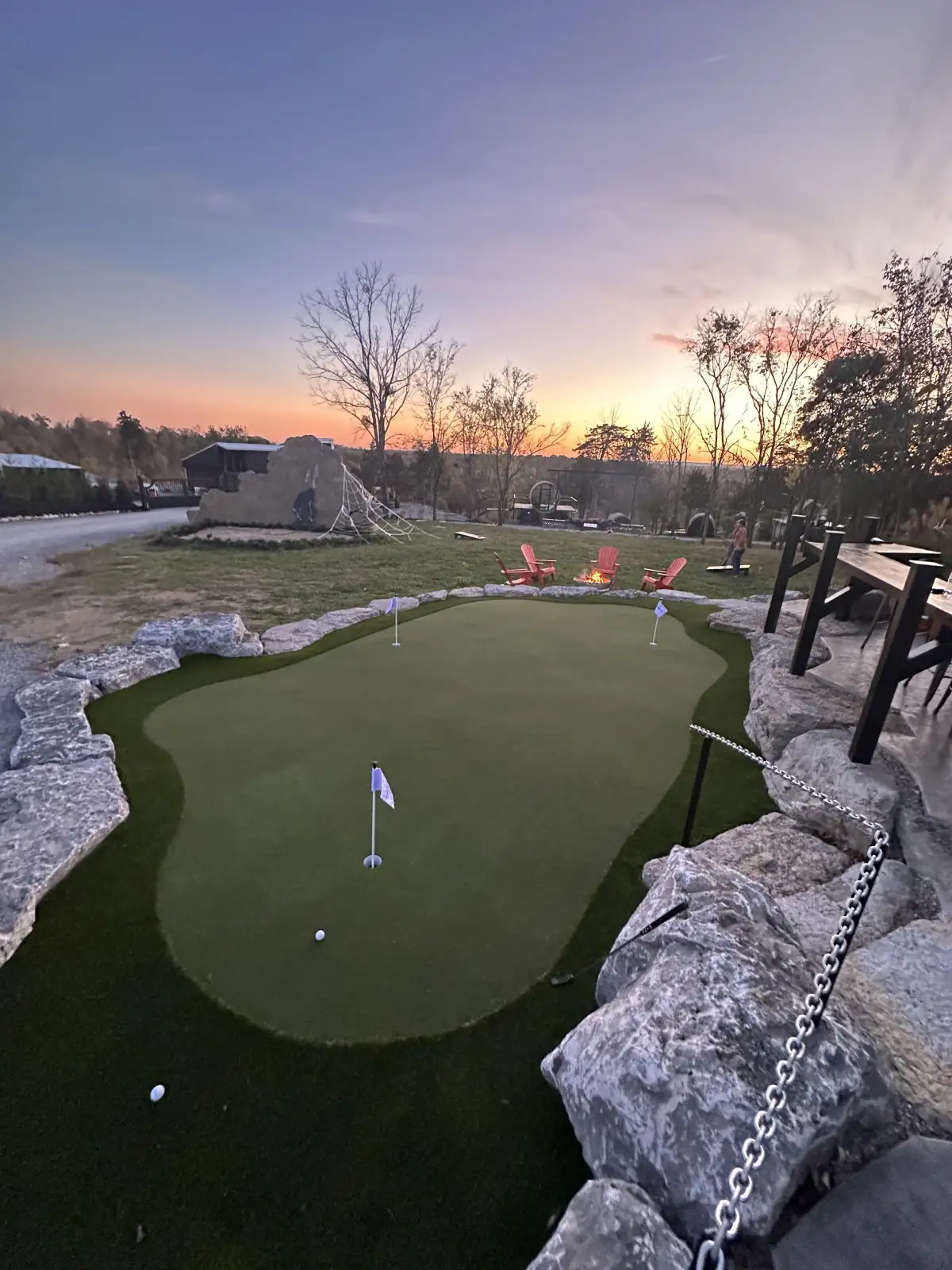
Great Lakes Synthetic Turf currently presents $25 to $30 per square foot as an early planning range for a custom putting green in Michigan, with many residential greens falling between $7,500 and $18,000. That gives you a useful first number, but it is not a flat price menu. The actual proposal depends on what you want to practice and what your yard requires below and around the playing surface.
This guide answers the cost question specifically for putting greens. For the full design and construction overview, read the backyard putting green planning guide. To discuss a measured design, visit the putting green installation service page.
The fastest way to misread a putting green quote: compare only the final square-foot price. First confirm what the measured area includes, then compare the written scope for the base, contours, cups, fringe, drainage, edges, transitions, and cleanup.
Putting green cost examples by finished size
The examples below apply the current $25 to $30 planning range to the finished square footage. They are budgeting arithmetic—not property-specific quotes. A small, intricate green can require more work per square foot than a larger, open shape.
| Finished area | Planning math | What to confirm |
|---|---|---|
| 300 sq. ft. | $7,500–$9,000 | Whether fringe, cups, and perimeter finish are included in the measured area. |
| 500 sq. ft. | $12,500–$15,000 | How contours, access, and material layout affect the written scope. |
| 600 sq. ft. | $15,000–$18,000 | Whether approach turf or a separate chipping area is part of the plan. |
| 1,000 sq. ft. | $25,000–$30,000 | Whether 1,000 square feet means the putting surface alone or the complete turf footprint. |
Use these numbers to decide whether the general size fits your budget. Do not design the green around square footage alone. A smaller green with several useful putts can have more practice value than a large surface whose slopes and cup positions all create the same line.
Seven details that change a putting green quote
1. The putting surface and the complete turf footprint
A proposal may measure only the short putting surface, or it may also include taller fringe and approach turf. Ask for those areas to be labeled separately. That makes it easier to understand the total size and compare two designs fairly.
2. Shape, contours, and practice goals
Curves, breaks, and elevation changes make a green more interesting, but they also require precise shaping and fitting. Tell the designer whether you want straight putting practice, multiple breaking lines, longer putts, or room to chip. The answer should guide the layout before decorative features do.
3. Existing surface and preparation
Grass, soil, old landscape material, roots, or another surface may need to be removed before the base can be built. The grade also has to support a playable result. Ask what removal, disposal, base preparation, and compaction are included.
4. Drainage and runoff
Water still needs a planned route after it passes through the turf. Low areas, roof discharge, nearby hardscape, or water moving toward the proposed green can change the preparation. If your yard already holds water, a separate drainage solution may need to be discussed with the green.
5. Access to the work area
Wide, direct access and a narrow route through gates, steps, or side yards are different jobs even when the green is the same size. Show the route from the street or driveway to the proposed installation area so the estimate can account for how materials and removed soil will move.
6. Cups, fringe, and approach areas
Multiple cup locations can create varied practice lines. Fringe and approach turf can add chipping practice and shape the green visually. Ask which of these details are included and whether the proposal identifies their quantities and boundaries.
7. Edges and nearby outdoor features
Stone, planting beds, patios, walkways, steps, and lighting can all affect how the green is fitted and finished. If those features are part of a larger backyard plan, decide which work belongs in the putting green proposal and which work is a separate phase.
How to compare two putting green proposals
A useful comparison starts with the drawing and written scope, not the total alone. Ask each installer to identify:
- Area: putting surface, fringe, approach area, and total turf footprint.
- Design: shape, intended practice lines, contours, and cup count.
- Preparation: removal, disposal, grading, base work, and compaction.
- Water plan: how the existing grade, runoff, and nearby hardscape are addressed.
- Materials: the putting surface, fringe or approach turf, infill, seams, and edge treatment.
- Site logistics: access assumptions, protection of adjacent areas, cleanup, and any excluded restoration.
If one proposal is lower, find the scope difference before treating it as a savings. A shorter description can hide an allowance, exclusion, smaller footprint, fewer features, or a different preparation plan.
What Michigan homeowners should send for an estimate
Start with approximate dimensions and clear photos from several angles. Include the route into the yard, nearby patios or steps, visible slopes, downspouts, known wet spots, and the area where you expect to stand for longer putts or chips. Note the number of cups you have in mind and whether you want fringe or an approach area.
Great Lakes Synthetic Turf serves homeowners across Michigan. For a home in Benton Harbor, the city establishes service coverage—not the price. The same property-specific questions about access, grade, water, shape, and practice goals still determine the scope. Homeowners elsewhere can review the full Michigan service area list.
Putting Green Installation
See the service options and design details behind a custom Michigan green.
Backyard Green Planning Guide
Go deeper on location, layout, preparation, installation, and care.
Benton Harbor Service Area
Explore turf, drainage, and outdoor services available in Southwest Michigan.
Request a property-specific putting green estimate
Share your property location, approximate dimensions, yard photos, intended placement, and the kind of practice you want. Great Lakes Synthetic Turf can then discuss a putting green design and the site work your yard requires. Use the contact page or call (231) 414-6011.
Frequently Asked Questions
How much does a putting green cost to install?
Great Lakes Synthetic Turf currently presents $25 to $30 per square foot as an early Michigan planning range, with many residential putting greens falling between $7,500 and $18,000. The measured quote can change with the green's size and shape, site preparation, access, contours, cup count, fringe or approach turf, drainage, edges, and adjacent features.
How much would a 1,000-square-foot putting green cost?
At the current $25 to $30 planning range, 1,000 square feet works out to $25,000 to $30,000 before a site-specific quote. Confirm whether that measurement refers only to the putting surface or also includes fringe and approach areas, because the complete footprint and design determine the actual proposal.
Why does a putting green cost more per square foot than a basic turf lawn?
A putting green is a precision playing surface. The estimate may account for shaping usable breaks, creating a consistent base, fitting specialized putting and fringe turf, placing cups, and finishing transitions in addition to the site preparation, drainage, edging, and cleanup required for turf work generally.
Does a backyard putting green add value to a home?
A putting green can make a yard more useful and appealing to a golfer, but resale value is not guaranteed and depends on the buyer and the broader property. Plan the green first for the practice and outdoor-living value you expect to use rather than assuming a specific return at sale.
What should I send before requesting a putting green estimate?
Share the property location, approximate dimensions, yard photos, intended placement, access route, known wet areas, and the kind of practice you want. It also helps to note the number of cups, whether you want fringe or chipping space, and any nearby patio, steps, planting beds, lighting, or other features that affect the boundary.