
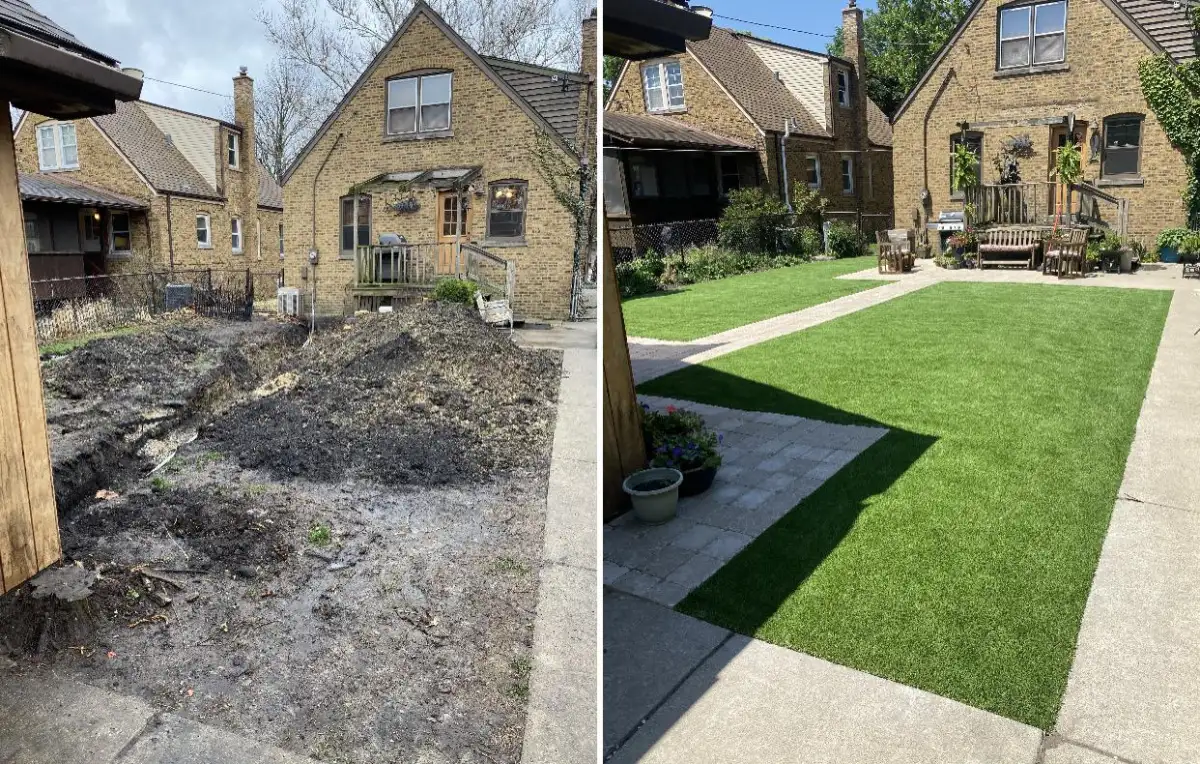
The most useful questions to ask before booking artificial turf installation in Benton Harbor are the ones that connect your daily use of the space to the construction plan underneath it. A good-looking turf sample matters, but it cannot tell you how the yard will drain, how the base will be prepared, where seams will land, or what the written price includes.
Begin with the result you need. A cleaner dog route, a lawn that avoids recurring mud, a low-mowing gathering area, and a backyard practice green place different demands on the surface. Great Lakes Synthetic Turf provides artificial turf installation for Michigan properties, and homeowners can review local service details on the Benton Harbor service area page.
Bring these details to the first conversation: the approximate footprint, how the area will be used, where water collects, nearby downspouts, pets, gates and steps, irrigation, trees, and adjoining concrete or pavers.
1. What problem should this surface solve?
Describe what is not working now and what success looks like after installation. If the issue is mud, identify when and where it appears. If the space is for dogs, discuss traffic paths, cleanup, rinse access, and edge security. If the goal is appearance, note the main viewing directions and the transitions visitors will see from the house, patio, or walk.
This first answer helps narrow later choices. A standard lawn application, pet turf system, and putting green installation should not be evaluated by the same priorities.
2. What will be removed, graded, and rebuilt?
Ask the installer to explain the work from the existing ground up. The proposal should address removal and disposal, excavation, grade correction, aggregate base, compaction, perimeter restraint, turf layout, seams, infill, transitions, and cleanup. If a line says only “standard prep,” ask what that means for this property.
Great Lakes Synthetic Turf describes its turf work as using drainage stone base preparation and framed edge containment. The property discussion should still show how those elements meet the actual fences, planting beds, walks, drains, steps, and other fixed edges around the planned footprint.
3. Where will rain and snowmelt go?
A permeable turf surface is only the first part of the water path. Moisture also needs to pass through the prepared base and continue away without being trapped by a low grade, compacted subsoil, border, or nearby hardscape. Ask the installer to point out where water enters, how finished elevations will direct it, and where it will leave the area.
The EPA has described public green-infrastructure work in Benton Harbor related to stormwater. That citywide project does not diagnose a private yard, but it is a useful reminder that water movement deserves a property-specific answer. If the site already holds water, the scope may need grading or a separate drainage solution; turf alone does not correct the cause.
4. Why do these turf, infill, edge, and seam choices fit?
Ask for the selected turf and infill to be named and connected to the intended use. Appearance, fiber characteristics, backing, drainage, surface feel, traffic, pets, and cleaning all matter. Look at samples outdoors and from the direction in which the finished space will most often be seen.
Then move beyond the sample. Ask where seams will fall, how the grain direction will be oriented, how the perimeter will be secured, and how the surface will finish against concrete, pavers, beds, trees, and drains. Those decisions affect the completed installation as much as the color of the turf.
Artificial Turf Installation
See how site evaluation, base preparation, drainage, edge containment, turf, and infill work together.
Benton Harbor Service Area
Review turf, pet-area, putting green, drainage, and outdoor services available in the area.
Michigan Turf Cost Guide
Learn which site, material, access, and construction variables shape an installed estimate.
5. What is included in the price?
Homeowners often search for the cost of a 1,000-square-foot installation, but area alone cannot produce a dependable project total. The same footprint can require very different removal, grading, drainage, base material, access labor, curves, seams, edge work, and transitions.
Compare complete written scopes rather than only the final numbers. Confirm the measured footprint, named materials, preparation, disposal, access assumptions, cleanup, exclusions, payment terms, and the process for approving a change. The Michigan artificial turf cost guide explains the major estimating variables without treating an online square-foot figure as a substitute for a property review.
6. What care and tradeoffs should I expect?
Artificial turf eliminates mowing, but it is not maintenance-free. Routine care can include removing leaves and debris, rinsing, brushing high-traffic fibers, cleaning pet areas, and checking infill, seams, edges, and drainage. Ask for care instructions that match the selected system, tree cover, shade, pets, and traffic. Our Michigan maintenance guide covers seasonal considerations in more detail.
Also ask about tradeoffs before you book. Artificial turf has an upfront cost and can warm in direct sun. Some owners later remove turf because the landscape use changes, the surface ages, or the original installation developed issues with drainage, base preparation, seams, or edges. A clear plan for the site and realistic ownership expectations reduce avoidable surprises.
7. Which responsibilities belong in writing?
- The project footprint and intended use are clearly identified.
- Removal, excavation, grade, base, edges, seams, infill, transitions, and cleanup are defined.
- The drainage explanation follows water from the surface through the base and away from the area.
- Gate width, steps, hauling distance, and protection of nearby surfaces are accounted for.
- Homeowner preparation, material selections, schedule assumptions, and exclusions are written down.
- Product and workmanship warranty terms are provided separately, including coverage, exclusions, and how to report a concern.
- Any permit or approval responsibility is confirmed for the actual property and scope.
When those answers are specific to the property, you can judge whether the proposed system fits your yard instead of choosing from turf samples and bottom-line prices alone.
Discuss your Benton Harbor turf project
Use the Great Lakes Synthetic Turf contact page to review phone and email options, or start with the online estimator and share the address, approximate dimensions, photos, intended use, pets, wet areas, and access details.
Frequently Asked Questions
What should an artificial turf estimate include?
A useful estimate should define the measured area, removal and disposal, excavation and grading, drainage work, base materials, turf and infill, perimeter restraint, seams, transitions, access assumptions, cleanup, exclusions, and how changes will be approved.
Will artificial turf solve a drainage problem in my Benton Harbor yard?
Artificial turf can be part of a permeable surface system, but the turf alone does not correct low grades, compacted soil, downspout discharge, or a missing outlet. The proposal should explain how water moves through the surface and base and where it goes next.
How much does 1,000 square feet of artificial turf cost?
Square footage is not enough to produce a reliable installed price. Removal, excavation, grade, drainage, access, materials, edges, seams, curves, transitions, and intended use can all change the scope, so a measured site-specific estimate is more useful than a broad online total.
What maintenance does artificial turf require?
Routine care commonly includes removing debris, rinsing when needed, brushing high-traffic fibers, cleaning pet areas, and checking infill, seams, edges, and drainage. The schedule depends on trees, shade, pets, traffic, and the selected turf system.
What problems should I watch for in an artificial turf proposal?
Warning signs include a price based only on square footage, no explanation of grade or drainage, vague base and edge details, a product recommendation unrelated to the intended use, missing access or transition details, and no written exclusions, care guidance, or warranty terms.