
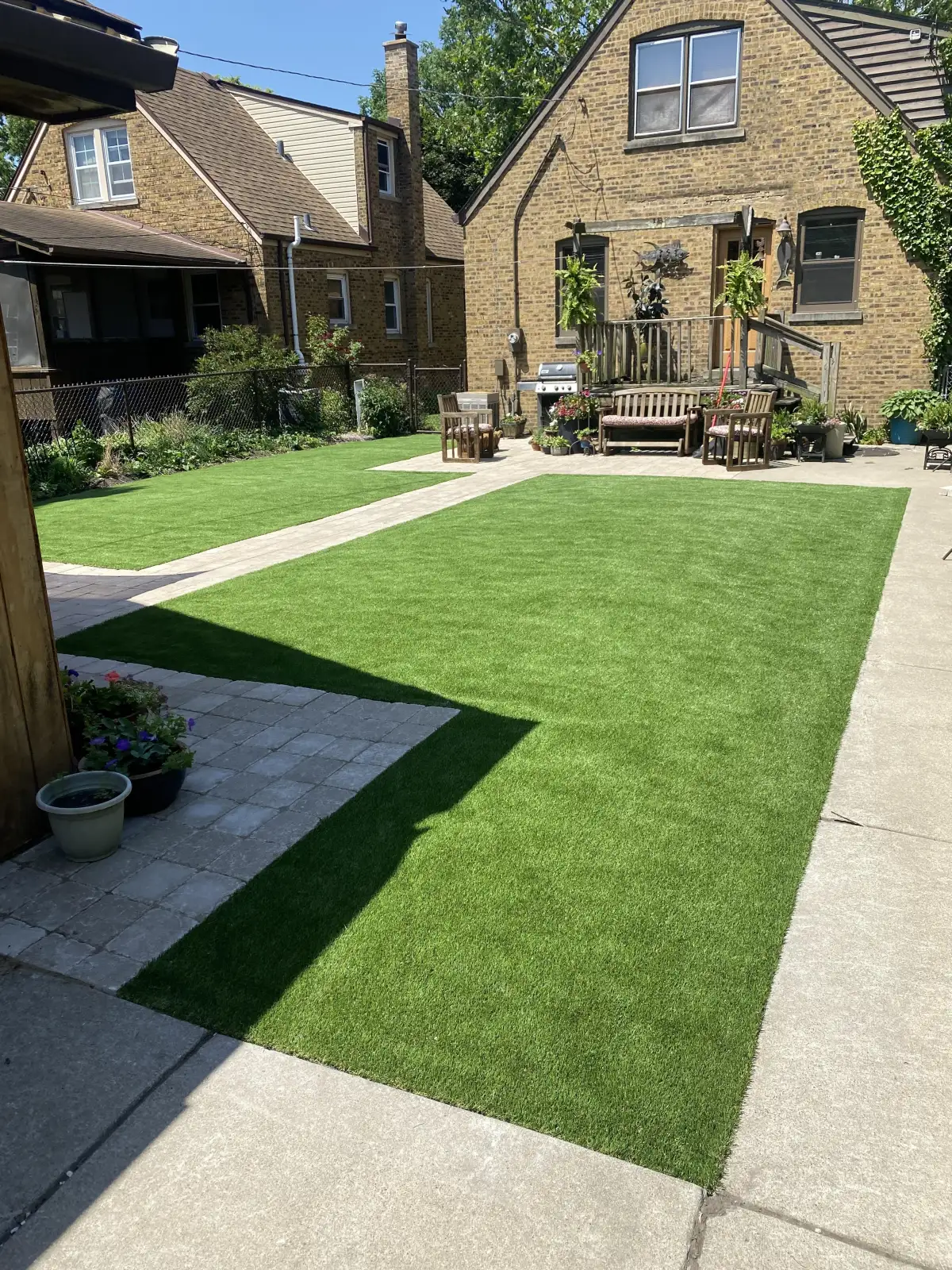
Before booking artificial turf installation in Benton Harbor, ask the installer to explain the entire system for your property—not only the turf product. The best questions connect what you can see to the work below it: existing grade, water movement, excavation, aggregate base, perimeter restraint, seams, infill, transitions, and cleanup.
This matters when a yard has seasonal wet spots, shade, a muddy dog route, limited gate access, or several hardscape edges. A site-specific discussion also helps you separate a realistic proposal from a price that assumes every yard is a flat, open rectangle.
Before the appointment: note where water collects after rain or snowmelt, measure the approximate footprint, photograph gates and access routes, and decide who will use the space. Those details make the first conversation more productive.
1. What should the site evaluation cover?
A useful evaluation starts with the existing conditions. Ask the installer to look at slope, low spots, downspouts, soft ground, tree roots, irrigation, utilities that have been identified, fixed structures, and the height of adjoining patios, walks, doors, and landscape beds. Those conditions shape the removal, grade, drainage, base, and transition plan.
Be specific about the problem you want to solve. A lawn that struggles in shade, a pet area that becomes muddy, a narrow side yard, a family gathering space, and a practice green do not have identical performance priorities. Great Lakes Synthetic Turf offers artificial turf installation throughout its Benton Harbor service area, so the estimate should be tied to both the property and its intended use.
2. How will water move through and away from the turf?
Permeable turf is only one part of drainage. Water must also pass through the prepared base and continue toward an appropriate outlet without being trapped by a low grade, compacted subsoil, edging, or nearby hardscape. Ask where runoff enters the area, where it should leave, and how the finished elevations support that path.
If the yard already holds water, do not assume the new surface will solve the cause. The scope may need grading or a separate drainage solution. The company's Michigan turf drainage guide explains why the surface, aggregate base, grade, and outlet need to work together.
3. What exactly will be removed and built below the turf?
Ask for a plain-language sequence. It should address removal and disposal, excavation, grading, aggregate placement, compaction, perimeter restraint, turf layout, seams, infill, transitions, and final cleanup. The appropriate materials and depths depend on actual site conditions; vague phrases such as “standard preparation” do not make proposals easy to compare.
Great Lakes Synthetic Turf describes its installations as using drainage stone base preparation and framed edge containment. Ask how that system will meet the specific fences, planting beds, concrete, pavers, steps, and other fixed edges around your project.
Artificial Turf Installation
Review the company's approach to evaluation, preparation, drainage, edging, turf, infill, and finishing.
Benton Harbor Service Area
See the artificial turf, pet turf, putting green, drainage, and outdoor services available in the area.
Michigan Turf Cost Guide
Understand the property and scope variables that can change a professional installation estimate.
4. Which turf and infill fit the way the space will be used?
Ask why the recommended combination fits your priorities. Appearance, pile characteristics, density, backing, drainage, surface feel, infill, foot traffic, viewing direction, and seam placement can all matter. Look at samples outdoors and from the directions where the finished yard will be seen most often.
Specialty spaces need more specific questions. A dog yard requires a plan for liquid drainage, cleaning, rinse access, infill, and secure edges; learn more about pet turf installation. A practice area needs a dedicated putting green system with decisions about contours, cups, fringe, and ball roll rather than a standard lawn surface.
5. How will access and existing features affect the work?
Gate width, steps, fences, tight side yards, overhead obstacles, decks, patios, planting, and the distance from the street can affect how material and equipment reach the site. Ask what access is required, what must be moved, and how surrounding surfaces will be protected.
Confirm how turf will finish around trees, beds, drains, utilities, irrigation components, concrete, pavers, and other transitions. A drawing or clearly marked footprint can prevent misunderstandings about what is included and which existing features remain.
6. What is included in the estimate—and what could change it?
Measured square footage is only the starting point. Removal, disposal, excavation, grade correction, drainage, aggregate base, turf, infill, perimeter restraint, seams, curves, access labor, specialty features, and cleanup can all affect the total. A smaller space can still require detailed labor when access is tight or the footprint has many edges.
Ask for named materials, quantities or measured area where practical, preparation steps, exclusions, payment terms, and a written process for approving changes. Compare the finished systems being proposed, not just the bottom-line number. The Michigan artificial turf cost guide provides more context on the variables behind an estimate without substituting a generic online price for a property review.
7. What should we know about timing, approvals, and site readiness?
Ask what needs to happen before an installation date can be confirmed: final measurements, product selection, material availability, property access, homeowner responsibilities, and any related approvals. Weather and wet ground can affect excavation and compaction, so discuss how site conditions may change the schedule rather than relying on a date without assumptions.
Permit or review needs can depend on the property and on connected work such as drainage changes or hardscaping. Identify the correct local jurisdiction for the address and confirm whether the planned scope requires approval before work begins. Do not rely on a blanket answer that applies to every property.
8. What care and written protections follow installation?
Artificial turf reduces mowing and routine lawn watering, but it is not maintenance-free. Ask how to remove debris, rinse the surface, brush high-traffic fibers, clean pet areas, manage snow, and check infill, seams, and edges. Tree cover, traffic, pets, and shade can change the routine. The Michigan artificial turf maintenance guide offers a seasonal overview.
Request product and workmanship warranty terms separately in writing. Confirm who provides each one, what it covers, exclusions, required care, duration, transferability, and the process for reporting a concern. Avoid assuming that a manufacturer product warranty covers installation labor or site conditions.
Use this booking checklist during your estimate
- The installer has seen the full footprint, access route, slopes, low spots, and transitions.
- The drainage path is explained from the turf surface through the base and away from the area.
- Removal, excavation, aggregate, compaction, edges, seams, infill, and cleanup are defined.
- The turf and infill recommendation is connected to people, pets, traffic, and the intended use.
- Access limits and existing landscape or hardscape features appear in the scope.
- The estimate identifies inclusions, exclusions, payment terms, and the change process.
- Scheduling assumptions and any needed local approvals are settled before work begins.
- Maintenance instructions and separate product and workmanship terms are available in writing.
Start a Benton Harbor artificial turf conversation
Ready to discuss your property? Contact Great Lakes Synthetic Turf to review your project options, or use the branded estimator link to share the address, approximate dimensions, photos, intended use, pets, drainage concerns, and access details.
Frequently Asked Questions
What should I ask an artificial turf installer before booking?
Ask how the installer will evaluate grade and drainage, what will be removed, how the base and edges will be built, why the turf and infill fit the intended use, what the estimate includes, how site access affects the work, and what maintenance and warranty terms apply.
Can artificial turf fix a wet area in my Benton Harbor yard?
A permeable turf system can move water through the surface, but turf alone does not repair an existing drainage problem. Low spots, downspouts, compacted soil, grade, base construction, and the route water takes away from the area should be evaluated.
How do installers price artificial turf projects?
Measured area is only one factor. Removal, disposal, excavation, grading, drainage, base materials, turf and infill selection, seams, edge restraint, site access, transitions, specialty uses, and cleanup can all affect the written estimate.
Do I need a permit for artificial turf installation in Benton Harbor?
Approval needs can depend on the property and on related work such as drainage changes, hardscaping, or work near regulated areas. Before booking, identify the correct local jurisdiction and confirm whether the planned scope requires a permit, review, or other approval.
What maintenance should I expect after artificial turf is installed?
Routine care can include debris removal, rinsing, brushing high-traffic fibers, cleaning pet areas, and periodic checks of seams, edges, and infill. Tree cover, pets, traffic, shade, and the selected system affect the maintenance routine.