
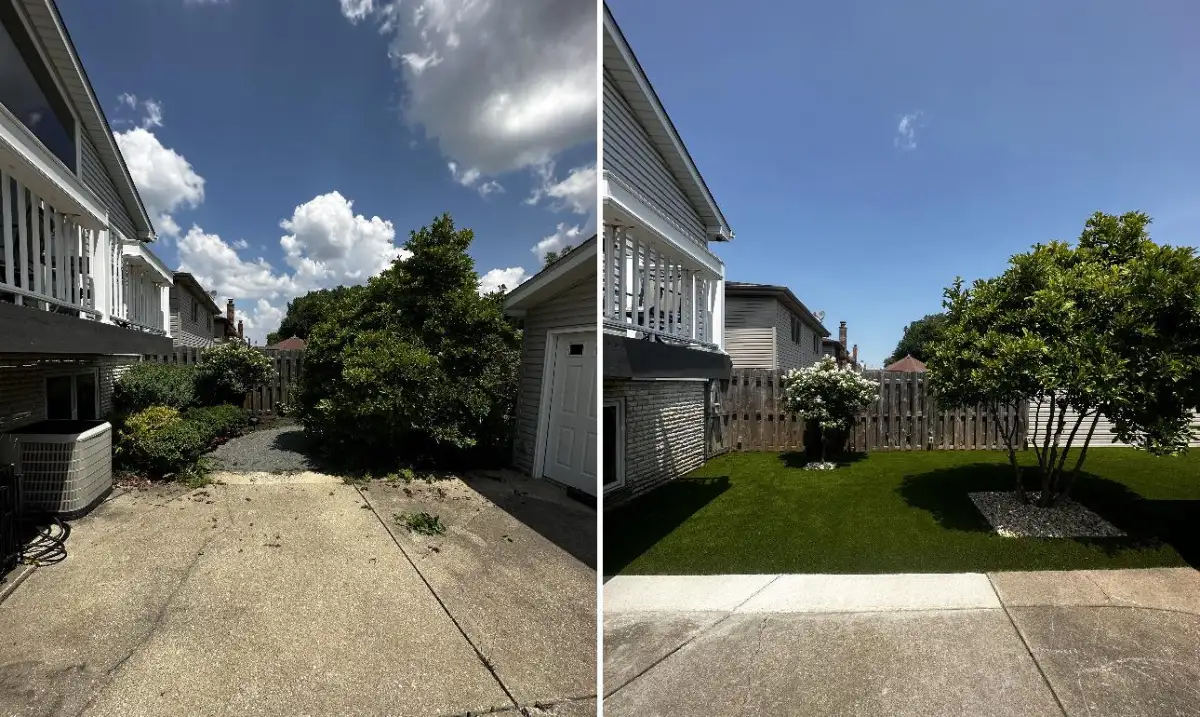
Before booking artificial turf installation in Benton Harbor, focus first on whether the proposed system fits your property and the way you plan to use it. A lawn, dog run, shaded side yard, pool surround, and putting green create different priorities for drainage, product selection, edges, cleaning, and surface performance.
The useful questions begin below the visible turf. Great Lakes Synthetic Turf reviews grade, soil conditions, drainage routes, downspouts, gate access, pet traffic, shade, and nearby hardscape before recommending the turf product, aggregate base, edge system, and infill. That site review gives the written estimate a property-specific foundation.
A booking-ready proposal should answer three things: how the site will be prepared, how water will move through and away from the area, and what materials and responsibilities are included in the price.
1. What will the installer evaluate at my property?
Expect the conversation to cover the intended use, approximate footprint, existing surface, slope, low spots, soil, shade, irrigation or downspouts, adjoining patios or walks, and access for labor and equipment. Photos and measurements are useful starting points, but an on-site review can reveal conditions that change the scope.
Tell the installer about recurring puddles, soft areas, buried features you know about, pets, and how people move through the yard. A narrow gate, steps, fencing, mature planting, or a long hauling route may affect equipment choices and site preparation. For local service details, see the Benton Harbor service area page.
2. Does rain drain through artificial grass?
Many artificial grass products allow water to pass through the surface, but that does not guarantee that the entire yard will drain well. The finished grade, aggregate base, compacted subgrade, nearby downspouts, low areas, and a clear route for water to leave the space all affect the result.
Ask where water is expected to go during rain and snowmelt. If the property already has standing water or runoff concerns, the estimate should distinguish the turf base work from any broader drainage work the site may need. Great Lakes Synthetic Turf uses drainage stone base preparation and framed edge containment for its turf installations; the proposal should explain how those elements apply to the specific yard.
3. What actually determines the installed price?
Square footage is only one input. Removal and disposal, excavation, grade correction, drainage needs, access, aggregate base, turf selection, infill, edge restraint, seams, curves, and transitions can all change the work. This is why a broad online square-foot figure cannot describe every 400-square-foot project accurately.
Compare written scope, not just totals. Confirm what will be removed, how the base will be built, which turf and infill are included, how edges and seams will be handled, what cleanup is included, and what is excluded. Ask how unexpected subsurface conditions or requested changes would be documented before additional work proceeds.
Installation Service
Review the role of site evaluation, base preparation, drainage, edge containment, turf selection, and finishing.
Benton Harbor Service Area
Explore artificial turf, pet turf, putting green, drainage, and related outdoor services available locally.
Michigan Drainage Guide
Learn how surface permeability, grade, aggregate base, and water routes work together beneath turf.
4. Which turf details should be named before I approve the work?
The proposal should identify the selected turf product and why it fits the intended use. Ask about surface feel, density, pile, backing and drainage characteristics, color, infill, viewing direction, and seam locations. A sample can help with appearance, but it does not replace a discussion of how the complete system will perform.
Use matters. Pet areas place more emphasis on drainage, rinse access, cleaning, infill, and secure edges. Putting greens require a purpose-built surface and careful decisions about contours, cups, fringe, and finished ball roll. Family lawns may prioritize comfort, traffic patterns, appearance from the house, and transitions to hardscape.
5. What maintenance will the finished turf need?
Artificial turf removes mowing and routine lawn watering, but it is not maintenance-free. Leaves and debris should be removed. High-traffic fibers may need brushing. Pet areas require a cleaning routine, and edges, seams, and infill should be watched over time. Ask for care guidance that matches the product and intended use.
Discuss tradeoffs before booking too. Artificial turf has an upfront cost and can feel warmer than natural grass in direct sun. Tree cover, shade, pets, daily traffic, and nearby planting can change both cleaning needs and comfort. A suitable system should make sense for the property after those conditions are considered—not simply look good as a small sample.
6. Why do some homeowners remove artificial grass?
Removal does not have one cause. A homeowner may redesign the landscape, change how a space is used, replace an aging surface, or address problems tied to product fit, drainage, base preparation, seams, or edges. Those possibilities are useful reminders to ask about construction and long-term care before the initial installation.
Artificial turf is an alternative to natural grass, not an automatic answer for every yard. If the site, surface, or ownership tradeoffs do not match your priorities, it is better to decide that during planning than after installation.
7. What should I confirm before signing?
- The measured area and intended use match the proposal.
- Removal, disposal, grading, base preparation, and compaction are described.
- The drainage plan identifies how water will move through and away from the area.
- The turf product, infill, edges, seams, transitions, and viewing direction are clear.
- Access assumptions, cleanup, exclusions, and change-order steps are in writing.
- Applicable product and workmanship warranty terms can be reviewed before approval.
- Maintenance guidance fits the property's pets, trees, shade, and traffic.
When those details are clear, you can judge whether the proposed artificial turf installation fits both the yard and your expectations. Great Lakes Synthetic Turf serves homeowners in Benton Harbor and across Michigan.
Request a site-specific estimate
Ready to discuss your yard? Share the approximate area, intended use, drainage concerns, access, pets, and nearby hardscape when you contact Great Lakes Synthetic Turf. A property review can then confirm the conditions that belong in your estimate.
Frequently Asked Questions
Does rain drain through artificial grass?
Many turf products allow water to pass through the surface, but drainage depends on the complete system. The finished grade, aggregate base, compacted subgrade, nearby downspouts, low areas, and route for water to leave the yard all matter. Ask the installer to explain where water will go, not only whether the turf backing is permeable.
What affects the cost of a 400-square-foot artificial turf area?
Area alone does not determine the installed cost. Removal and disposal, excavation, grade, drainage needs, access, aggregate base, turf selection, infill, edges, seams, curves, and transitions can all change the scope. A site-specific written estimate is more useful than applying a broad online square-foot price.
What maintenance does artificial turf require?
Routine care generally includes removing leaves and debris, rinsing when needed, brushing fibers in high-traffic areas, cleaning pet areas, and watching edges, seams, and infill. The right routine depends on tree cover, pets, traffic, shade, and the selected turf system.
Why do some homeowners remove artificial grass?
Removal can follow a landscape redesign, a change in how the space is used, an aging surface, or problems with product choice, drainage, base preparation, seams, or edges. Artificial turf also has tradeoffs, including upfront cost, warmer surface temperatures in direct sun, and ongoing cleaning. The right question is whether the proposed system fits the property and intended use.
What should I have ready before requesting an artificial turf estimate?
Be ready to describe the approximate area, how the space will be used, known wet spots or drainage issues, gate and equipment access, pets, irrigation or downspouts, nearby hardscape, and the finish you want. An on-site review can then confirm measurements and property conditions.