
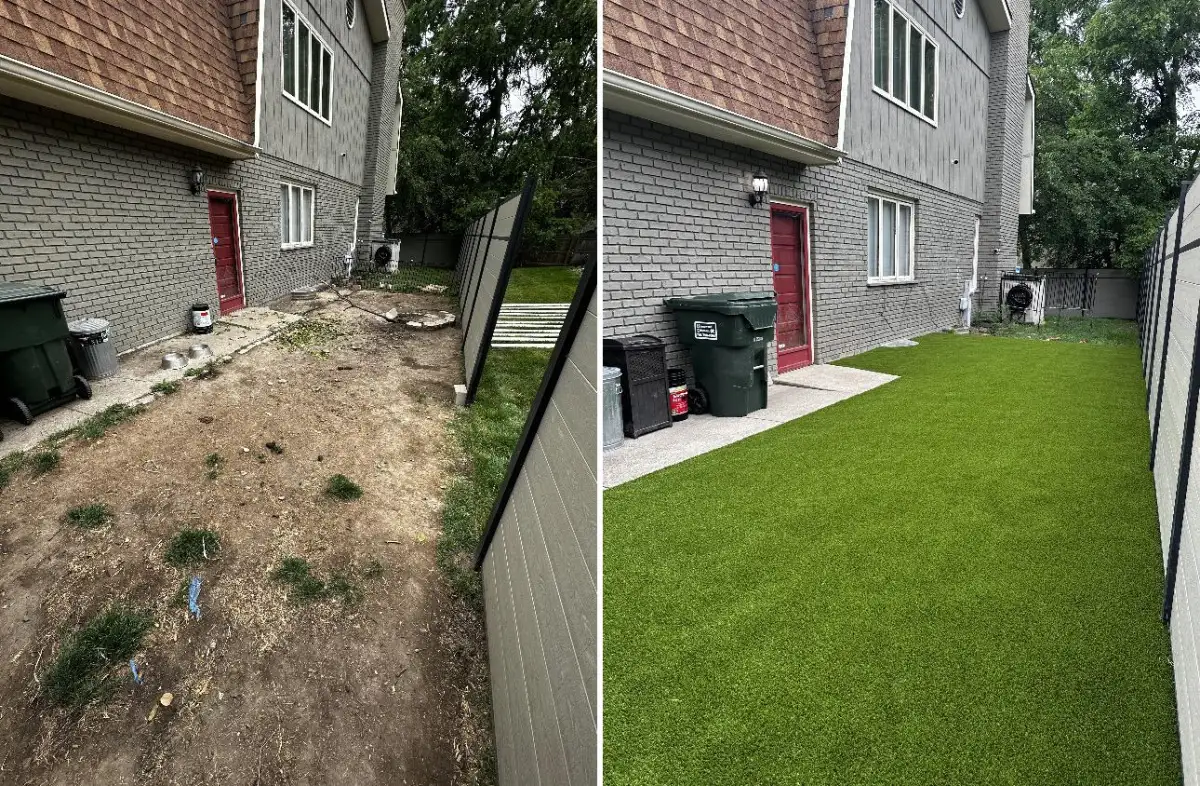
Before booking artificial turf installation in Benton Harbor, make sure the estimate explains how the finished yard will be built—not simply how many square feet it covers. Two proposals for the same space may include different amounts of removal, base preparation, drainage work, edge restraint, turf material, infill, and cleanup. Those differences make bottom-line comparisons incomplete.
A useful estimate connects the scope to the property. A shaded side yard, a family lawn, a dog run, and a putting green do not need the same surface or construction details. Great Lakes Synthetic Turf reviews grade, soil conditions, drainage routes, downspouts, gate access, pet traffic, shade, and nearby hardscape before recommending an installation system.
The first question to ask: “What property conditions did you account for in this estimate?” The answer should connect each major cost to the way your yard will be prepared, drained, used, and maintained.
What conditions are included in the site preparation?
Ask the installer to identify what is being removed, how material will leave the yard, how the grade will be adjusted, and what will support the turf. Existing organic material, soft spots, roots, low areas, irrigation, and transitions to concrete or planting beds can all change the work required before the roll is opened.
Access matters too. Narrow gates, steps, fences, and protected hardscape can affect equipment choices and the amount of hand labor involved. The estimate should state any access assumptions so a difficult route does not become an unexplained change later.
How will the base and drainage work together?
Artificial grass can be permeable, but surface permeability is only one part of drainage. Water still needs to pass through the base and move away from the finished area without collecting at low spots, edges, or adjacent structures. Ask where water is expected to go after a hard rain or snowmelt and how downspouts or existing wet areas affect that plan.
Great Lakes Synthetic Turf uses drainage stone base preparation and framed edge containment for its turf installations. Your proposal should explain the relevant grading, base, compaction, drainage, and perimeter work for your property. If the site already has a water problem, review the company's drainage contractor services and ask whether the solution belongs in the turf scope or should be addressed separately.
Which product details should the estimate name?
“Artificial turf” is not a complete material description. Ask for the selected product, its intended application, and the infill or other components included with it. The installer should be able to explain why the pile, density, backing, color, drainage characteristics, and surface feel suit the way the area will be used.
This conversation is especially important for pet areas and putting greens. Dog use changes the priorities for drainage, cleaning, edges, and infill. A putting surface depends on purpose-built turf, contours, cups, fringe, and a consistent finished roll. For a general lawn, viewing direction and seam placement affect how the finished surface looks from the house or patio.
Artificial Turf Installation
See how site review, base preparation, edge containment, product selection, and finishing fit together.
Benton Harbor Service Area
Explore turf, pet, putting green, drainage, and related outdoor services available in the area.
Michigan Turf Drainage
Learn why surface permeability, grade, aggregate base, and water routes must be planned together.
What is included—and specifically excluded?
Read the estimate for both scope and gaps. It should identify the measured area, excavation and disposal, grading, base preparation, drainage work, edge restraint, turf, seams, infill, transitions, cleanup, and any restoration outside the turf footprint. It should also clarify who handles irrigation changes, utility marking, permits when applicable, furniture, pet access, and private landscape features.
Ask how concealed conditions will be handled if excavation reveals unsuitable soil, buried debris, or an unexpected water route. A clear change-order process does not predict every condition; it explains how decisions and costs will be documented if the known scope changes.
How should warranties be compared?
Ask for product and workmanship terms in writing, and read them as separate commitments. Confirm who provides each warranty, what it covers, when the coverage begins, how a claim is made, and which maintenance or site conditions could affect coverage. Avoid treating a long headline term as a substitute for the actual language.
The proposal should also identify the exact turf product so its documentation can be matched to what will be installed. If warranty details are important to your decision, resolve them before signing rather than relying on a verbal summary.
What maintenance and tradeoffs should you expect?
Artificial turf avoids mowing and routine lawn watering, but it is not care-free. Leaves and debris still need to be removed. High-traffic fibers may need brushing, pet areas need a cleaning routine, and edges, seams, and infill should be checked periodically. Ask what care the proposed product requires and whether the installer provides written guidance.
Also discuss the downsides openly. Turf can feel warmer than natural grass in direct sun, has an upfront installation cost, and may eventually need repair or replacement. Shade, nearby trees, pets, and daily traffic affect the maintenance conversation. A good estimate should help you judge those tradeoffs for your yard instead of presenting turf as one answer for every situation.
Use one checklist to compare every proposal
- The measured area, intended use, and site assumptions match across proposals.
- Removal, disposal, grading, aggregate base, and compaction are described.
- The drainage route accounts for low spots, downspouts, soil, and adjoining surfaces.
- The turf product, infill, fiber direction, seams, edges, and transitions are identified.
- Access limits, utility or irrigation responsibilities, cleanup, and exclusions are clear.
- Change-order steps and applicable product and workmanship warranty terms are in writing.
- Maintenance guidance fits the planned use, including pets or heavy traffic when relevant.
Once the scope is comparable, the final number becomes more meaningful. If one estimate is substantially different, ask which preparation, material, or responsibility explains the gap. That conversation is more useful than assuming every “installed square foot” includes the same work.
Request a Benton Harbor turf estimate
Great Lakes Synthetic Turf provides artificial turf installation for properties in the Benton Harbor service area and across Michigan. To discuss the area, its intended use, drainage, access, and the finish you have in mind, contact Great Lakes Synthetic Turf for a site-specific estimate.
Frequently Asked Questions
How much does artificial turf installation cost in Benton Harbor?
The installed cost depends on the measured area, layout, removal and disposal, grade, drainage needs, access, base preparation, turf product, infill, edges, seams, and transitions. An on-site review and an itemized scope are more useful than applying a broad retail or online square-foot figure to every yard.
Does rain drain through artificial grass?
Many artificial turf products allow water through the surface, but the complete drainage result also depends on the finished grade, aggregate base, underlying soil, low spots, downspouts, and a clear route for water to leave the area.
What maintenance does artificial turf require?
Routine care generally includes removing leaves and debris, rinsing when needed, brushing high-traffic fibers, cleaning pet areas, and checking edges, seams, and infill. The exact routine should match the turf product, tree cover, traffic, pets, and intended use.
What are the downsides of artificial turf?
Artificial turf has an upfront installation cost, can feel warmer than natural grass in direct sun, and still requires cleaning and periodic care. Poor preparation can also lead to drainage, edge, seam, or surface problems, which is why the base and written scope deserve as much attention as the turf sample.
What should be included in an artificial turf estimate?
The estimate should identify the measured area, removal and disposal, grading, aggregate base, drainage work, edge restraint, turf product, infill, seams, transitions, access considerations, cleanup, exclusions, change-order process, and applicable product or workmanship warranty terms.