
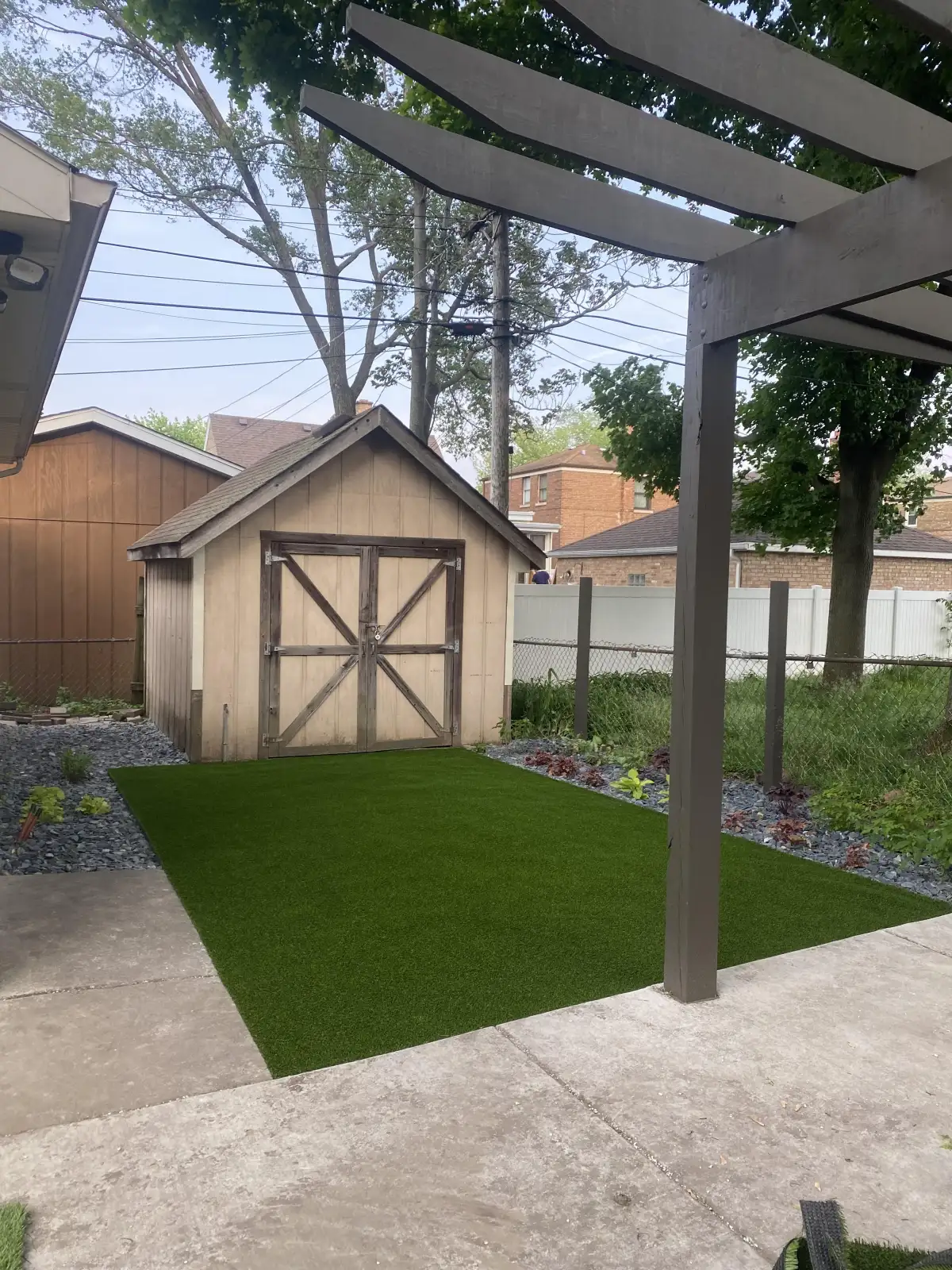
A compact putting green can deliver meaningful practice without taking over the backyard. The best designs use the available footprint to create varied putt lengths, readable breaks, useful cup positions, and a comfortable transition to the patio, lawn, or landscape beds.
Benton Harbor properties range from open lakeshore yards to narrow in-town lots. A good plan responds to that setting instead of forcing a tournament-scale concept into a residential space. Shape, slope, fringe width, access, runoff, and adjacent outdoor living areas all influence what will feel natural.
Great Lakes Synthetic Turf builds custom greens with compacted aggregate bases, precise grading, secure edges, and putting surfaces selected for the intended pace and style of play. Homeowners can pair a green with fringe turf, hardscape, landscape lighting, or a larger synthetic lawn.
Design priority: Start with the practice experience, not a target square-foot number. A few purposeful putt lines and well-placed cups are more valuable than extra surface area with no clear playing strategy.
Choose a footprint that creates real practice value
Begin with the putt lengths and positions you want to practice. A long, narrow green can support distance control, while a wider shape allows multiple lines into the same cup. The layout should also preserve walking room, garden access, and an easy path between the house and the rest of the yard.
Curves can help a green settle into landscaping, but every bend should serve the cup layout or a chipping approach. Tight leftover corners add cost without improving play. A site visit helps balance those choices against trees, patios, gates, utilities, and the route needed to bring aggregate into the yard.
Build contours into the base, not the surface
The compacted base establishes every rise, fall, and break. Subtle contour changes create repeatable practice; abrupt humps make speed inconsistent and can direct water toward a low point. The installer should shape and test the base before the putting turf is secured.
Base preparation also supports Michigan durability. Organic soil is removed, aggregate is placed and compacted, and the perimeter is restrained so the finished green remains stable through rain and freeze-thaw cycles. Existing standing water should be addressed through grading or drainage improvements before the surface goes down.
Use cups, fringe, and approach turf deliberately
Two or three cups can provide several practice lines when they are spaced around distinct contours. Fringe turf frames the green, catches off-line shots, and creates a clean transition to the surrounding yard. A wider approach area makes sense when chipping is a priority; a compact fringe is often enough for putting-focused designs.
The green should also meet nearby surfaces cleanly. Paver landings, seat walls, steps, planting beds, and low-voltage lighting are easier to coordinate before final grading. Review the full putting green installation service for product and construction details.
Artificial Turf Installation
See the statewide process, base preparation details, and service options.
Kalamazoo Turf Planning
Explore turf installation considerations for Kalamazoo properties.
Michigan Service Areas
Find your community and confirm service availability.
Plan for drainage without flattening the play
A putting green needs enough contour to be interesting and enough drainage strategy to recover after rain. Those goals are compatible when water movement is considered from the beginning. Roof runoff, low yard edges, compacted soil, and adjacent patios should all be reviewed before final elevations are set.
The green's base should move water away without creating a steep fall that overwhelms the intended roll. Where the surrounding property already holds water, drainage corrections may need to extend beyond the putting surface.
Define the green before requesting an estimate
Share rough dimensions, preferred putt lengths, the number of cups, whether chipping matters, and any patio or landscape work planned nearby. Wide photos that show grades, gates, downspouts, trees, and hardscape edges help establish a workable direction before the on-site review.
- Identify the longest putt the available yard should support.
- Choose whether the design is mainly for putting or includes chipping.
- Consider two or three cup locations with clearly different lines.
- Review fringe width and transitions to lawn, beds, or hardscape.
- Account for runoff, low spots, trees, roots, and equipment access.
- Coordinate lighting or patio work before the final grade is built.
Keep the finished roll consistent
Remove leaves and windblown debris, brush high-traffic areas as needed, and keep surrounding beds from washing soil onto the surface. After winter, allow snowmelt to drain before clearing remaining debris. These simple habits protect consistent ball roll without the mowing, watering, and chemical program of a natural green.
Great Lakes Synthetic Turf serves Benton Harbor and communities across Michigan with artificial turf installation, synthetic turf installation, artificial grass installation, pet turf, putting greens, drainage work, hardscaping, landscape lighting, outdoor living, and landscaping. Request a free estimate through the contact page or call (231) 414-6011.
FAQ
How much room does a backyard putting green need?
A useful green can fit a modest yard when its shape supports several putt lengths, safe cup spacing, and a clean fringe or hardscape transition. The right footprint depends on the property and practice goals.
Does a Benton Harbor putting green need drainage planning?
Yes. The subgrade, aggregate base, surrounding runoff, and finished contours must work together so rain and snowmelt do not collect on or beneath the green.
What makes a backyard putting green feel realistic?
Precise base preparation, intentional breaks, useful cup positions, the right putting surface, and a well-shaped fringe produce a repeatable practice experience.
Can a putting green connect to lawn turf or a patio?
Yes. The elevations, edge restraint, and drainage transitions should be planned together so putting turf, fringe, pavers, and lawn areas meet cleanly.
How many cups should a small backyard green have?
Two or three well-placed cups usually create more useful variety than crowding a compact surface. Spacing should preserve strong edges and distinct putt lines.
Can a backyard putting green be used after winter?
Yes. Let the surface drain after snowmelt, remove debris, and brush the turf as needed to restore a consistent spring roll.