
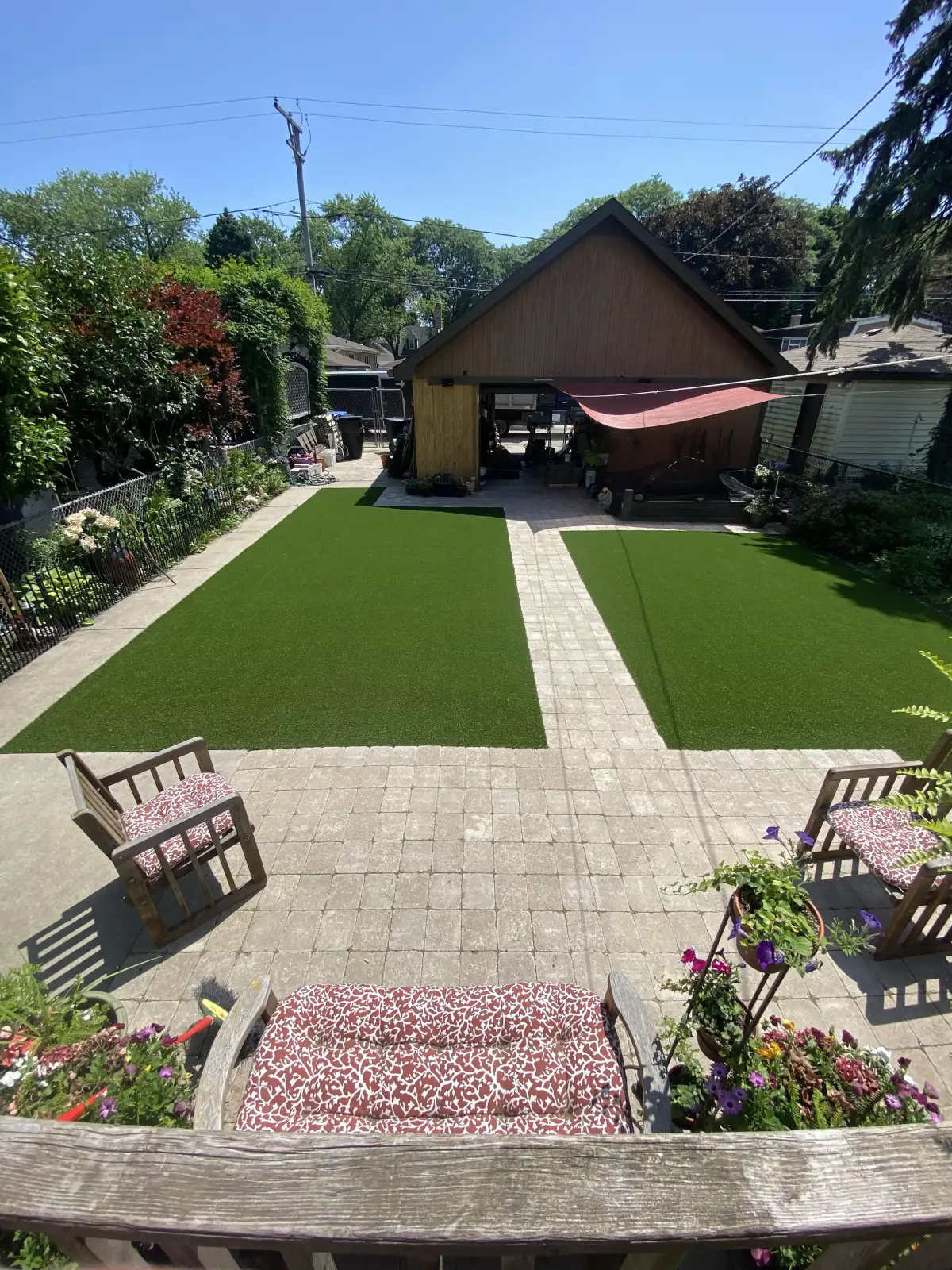
If you are comparing artificial turf installation in Benton Harbor, MI, start with drainage, base prep, and use case before you start comparing turf colors. The product matters, but the system underneath it decides whether the lawn drains after lake-effect rain, stays level after freeze-thaw cycles, and handles pets, foot traffic, or putting-green play without early failure.
Benton Harbor properties can bring several turf planning factors together at once: sandy soils, lake-effect weather, seasonal use, pets, patios, and drainage paths. A strong installation plan accounts for how the space will be used, where water will move, and how the base and edges will be built before the turf is installed.
Short answer: A Benton Harbor homeowner should ask how the installer excavates, grades, drains, edges, seams, and infills the turf. A quote that does not explain the drainage stone base and edge system is not complete enough to compare fairly.
Why These Questions Matter In Benton Harbor
Artificial turf installation is not just a product choice in Southwest Michigan. The finished lawn has to sit on a base that can handle lake-effect rain, snowmelt, sandy stretches near the lakeshore, and site access that may be tighter around established homes, rental properties, patios, and fences. A beautiful turf sample does not answer those questions by itself.
That is why the best first conversation sounds practical. The installer should ask what the yard does today, where water collects, how pets or kids use the space, whether the property is occupied year-round or seasonally, and what other work may happen nearby. Those answers shape whether the project is a simple lawn replacement, a drainage-sensitive pet run, a putting green, a side-yard cleanup, or part of a larger outdoor living plan.
1. What Problem Are You Trying To Solve?
Artificial turf can solve different problems on the same property. One Benton Harbor homeowner may want a clean side yard that does not turn muddy after spring snowmelt. Another may need a low-maintenance lawn for a seasonal property near the lakeshore. A family with dogs may care most about odor control and fast drainage. A golfer may want a backyard green with true roll and a fringe that blends into the surrounding landscape.
Before booking, describe the project by use, not just square footage. "Replace 900 square feet of lawn" is useful, but "replace a wet backyard used by two dogs and kids" is much more useful. That tells the installer to look closely at drainage, infill choice, cleaning access, and how the perimeter should transition into gates, patios, or planting beds.
2. How Will The Installer Handle Benton Harbor Drainage?
Benton Harbor and nearby lakeshore communities can have sandy soils, quick weather swings, heavy rain, lake-effect snow, and spring thaw. Sandy ground can drain well, but that does not mean a turf job should skip engineered base preparation. Turf still needs a stable compacted stone layer that moves water through the system and supports the surface evenly.
Ask the installer to explain where water goes. Will the area be excavated to a consistent depth? Will the subgrade be shaped so water moves away from the home and toward an appropriate drainage path? Will drainage stone be compacted in lifts? Is additional drainage needed near downspouts, low corners, or hardscape edges? Great Lakes Synthetic Turf uses a drainage stone base because proper drainage is the foundation of every turf installation, not an optional upgrade. Drainage solutions are also available when the existing yard needs correction.
3. What Base And Edge System Is Included?
The most important comparison point in turf quotes is often buried below the surface. A proper installation should include excavation, removal of organic material, grading, drainage stone, compaction, turf placement, seaming, edging, infill, and final grooming. If one quote is much lower, ask which of those steps are missing.
Great Lakes Synthetic Turf installs every turf system over a drainage stone base with framed edge containment. Turf edges can shift if they are only tucked or pinned into weak soil. A framed edge helps hold the perimeter cleanly through foot traffic, freeze-thaw movement, pets, and mower or blower activity around adjacent landscaping.
4. Is The Turf Product Right For Your Use?
Not every artificial grass product should be used everywhere. A front lawn needs a natural appearance, comfortable feel, and UV-stable fibers. A dog run needs fast drainage and pet-safe infill. A putting green needs a short, dense surface that supports a true ball roll. A commercial area may need durability over softness.
If pets are part of the project, ask whether the pet turf installation will include antimicrobial or pet-appropriate infill and how liquid waste will drain through the system. If golf is part of the plan, a putting green installation also needs careful decisions about cups, fringe, contours, and base tolerances.
5. What Should A Benton Harbor Estimate Include?
A useful estimate should be specific enough that you can compare it line by line. It should include approximate square footage, turf product type, excavation depth, base material, edging, infill, labor, site access assumptions, haul-off, drainage additions if needed, and expected project timing. If a travel or mobilization cost applies, it should be visible before you approve the work.
Professional artificial turf installation in Michigan typically costs between $13 and $15 per square foot installed, depending on project size, turf grade, and base preparation requirements. That range is most useful when it includes the full system. A cheap turf-only comparison can be misleading if it excludes excavation, drainage stone, edge containment, or haul-off.
When comparing estimates, ask each company to separate product selection from site preparation. Product selection covers blade shape, pile height, face weight, backing, color blend, and infill. Site preparation covers excavation, base depth, compaction, grading, drainage routing, edge restraint, seaming, and cleanup. If one proposal says "install turf" without explaining those line items, it may be describing a different scope than a drainage-first installation.
Also ask how changes are handled if the crew finds a low subgrade, old landscape fabric, buried debris, shallow roots, or drainage conflicts after excavation starts. Benton Harbor properties can vary widely from one block to the next, especially where older landscapes, lake-area sand, and newer hardscape additions meet. Clear change-order expectations protect both the homeowner and the installer.
6. When Is The Best Time To Book?
Michigan turf installation schedules are shaped by weather, ground conditions, and project complexity. Spring and early summer are popular because homeowners want the yard ready for outdoor use. Late summer and fall can also work well when the ground is stable and homeowners want to reduce next year's lawn maintenance before winter.
For Benton Harbor properties, access is worth discussing early. Narrow side yards, steep drives, limited parking, vacation-home schedules, or nearby hardscape work can change staging and timing. If you are planning turf along with hardscaping, landscape lighting, or a larger outdoor living project, ask which work should happen first so finished turf is not damaged by later construction traffic.
7. What Photos Should You Send Before The Visit?
Good photos make the first conversation more productive. Send wide photos of the entire project area, close-ups of low or muddy spots, photos of downspouts and drainage paths, gate and access photos, and any patios, walks, fences, beds, or retaining walls the turf will meet. If the area is for pets, show where dogs enter and exit the house. If it is for a putting green, show the desired viewing angle and how the green should connect to seating areas.
Photos do not replace an on-site estimate, but they help identify questions before the visit. They also make it easier to decide whether the project is a straightforward lawn replacement, a drainage-sensitive pet area, a putting green, or a phased outdoor living project.
Questions To Ask Before You Book
- How deep will you excavate, and what material will you remove?
- What base material is included, and how will it be compacted?
- How will water move through and away from the turf area?
- What edge system will keep the perimeter from shifting?
- What turf product fits my use: lawn, pets, putting green, or commercial traffic?
- Is infill included, and what type will be used?
- Is soil haul-off included in the quote?
- Who will be on site during installation?
- What site access or staging issues could affect the schedule?
- What maintenance will the surface need after installation?
Ready To Plan A Benton Harbor Turf Project?
If you are in Benton Harbor, St. Joseph, or another Southwest Michigan lakeshore community, start with a clear project scope and a drainage-first estimate. Great Lakes Synthetic Turf serves Benton Harbor as part of its statewide Michigan coverage and builds turf installations with proper base preparation, framed edges, and use-specific turf systems.
Learn what is included in a professional artificial turf installation, or request a free estimate for your Benton Harbor property. You can also call (231) 414-6011.
FAQ
What should Benton Harbor homeowners ask before booking artificial turf installation?
Ask about excavation depth, drainage stone base, edge containment, turf product, infill, soil haul-off, project timing, access, and who will be on site. These details tell you whether the quote covers a complete turf system.
Does artificial turf need special drainage near Benton Harbor, MI?
Yes. A turf project should still include a compacted drainage stone base and proper grading, even where sandy lakeshore soils already drain better than clay. The goal is to move water through the system consistently and prevent soft spots or settling.
How much does artificial turf installation cost in Michigan?
Professional artificial turf installation in Michigan typically costs between $13 and $15 per square foot installed, depending on project size, turf grade, drainage needs, and base preparation.
Can pet turf and a putting green be part of the same project?
Yes, but they should be planned as different surfaces. Pet turf and putting green turf use different products, drainage priorities, infill, and installation tolerances. Ask for separate scope details for each area.
What photos help with a Benton Harbor artificial turf estimate?
Send wide photos of the project area, low or wet spots, downspouts, gate access, patios, fences, pet paths, and any hardscape edges the turf will meet. These photos help the installer identify drainage, staging, and scope questions before the visit.
Should Benton Harbor homeowners plan drainage before choosing turf color?
Yes. Turf color and feel matter, but drainage, grading, base depth, edging, and use case should be settled first. Those details decide whether the finished surface stays stable and usable through rain, snowmelt, pets, and foot traffic.