
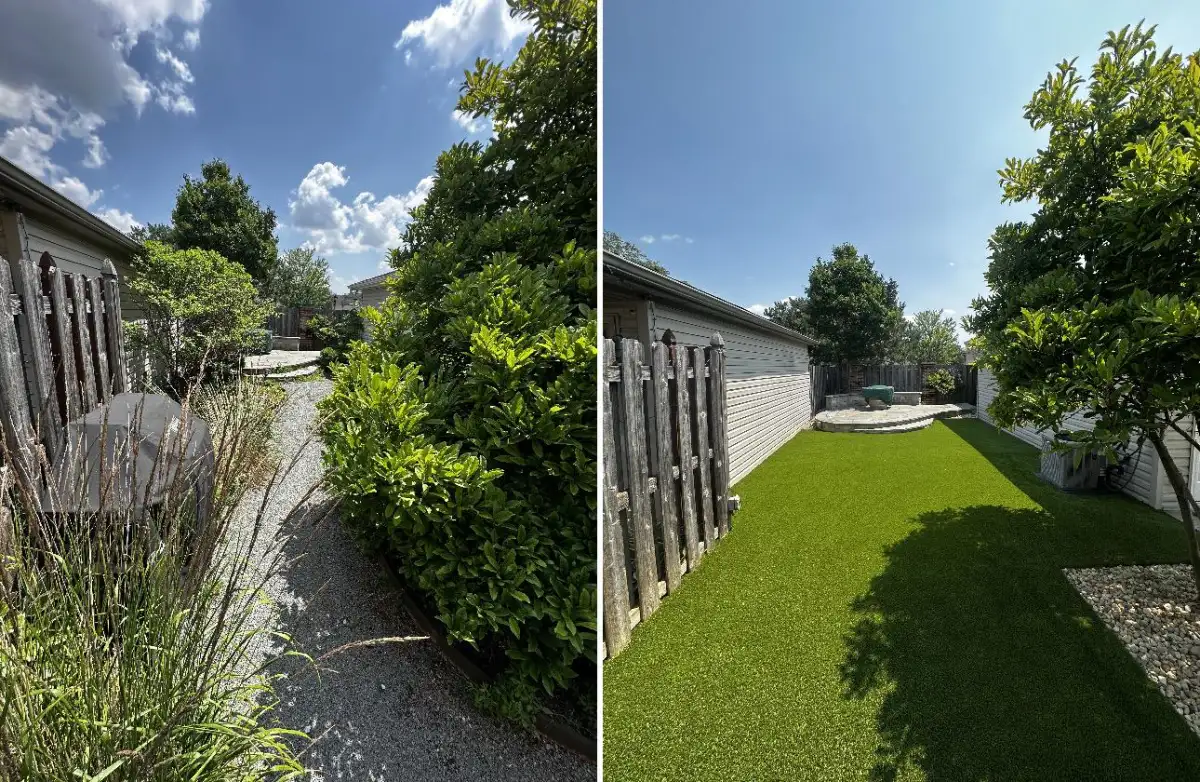
Before booking artificial turf installation in Benton Harbor, look beyond the color and softness of a sample. A dependable proposal should connect the finished surface to the property underneath it: grade, water movement, removal, aggregate base, secure edges, seams, infill, access, and the way your household will use the space.
That distinction matters for Southwest Michigan yards that face rain, snowmelt, shaded areas, muddy pet routes, or transitions to patios and planting beds. The seven questions below help you compare a complete installation plan rather than a product and a price alone.
Quick answer: the right proposal explains what will be removed, what will be built below the turf, where water will go, why the selected materials fit the use, what maintenance remains, and what is included in writing.
1. What problem should the turf solve?
Start with how the space fails today and what you want to change. A shaded lawn that thins each year, a dog route that turns muddy, a narrow side yard, a family play area, and a backyard practice green all call for different priorities. Tell the installer where water collects, how people and pets move through the area, and which nearby features must remain.
This is also the moment to decide whether turf is the right answer for the entire footprint. Artificial turf removes mowing and routine lawn watering, but it does not remove the need to manage runoff, leaves, direct-sun heat, trees, or surrounding landscaping. Great Lakes Synthetic Turf provides artificial turf installation for lawns and specialty uses throughout its Benton Harbor service area.
2. What will be built beneath the visible turf?
The surface is only the top layer. Ask the proposal to describe removal, excavation, grading, aggregate placement, compaction, edge restraint, turf fitting, seams, infill, transitions, and cleanup. The appropriate depth and materials depend on the site and intended use, so a description such as “ground preparation included” is not enough to compare two scopes.
Great Lakes Synthetic Turf describes its installation system around drainage stone base preparation and framed edge containment. Your written scope should explain how that approach meets concrete, pavers, fences, beds, steps, or other fixed edges on your property.
3. Where will rain and snowmelt go?
A permeable turf backing can let water pass through the surface, but that water still needs a path through the base and away from the finished area. Existing low spots, compacted soil, downspouts, slopes, and neighboring hardscape can all change the drainage plan.
If part of the yard already holds water, ask whether the proposed work corrects the cause or only installs a permeable surface above it. Turf alone is not a drainage repair. A broader drainage solution may be appropriate when runoff or standing water extends beyond the turf footprint. The Michigan turf drainage guide explains how the surface, base, grade, and outlet work together.
Artificial Turf Installation
Review the site evaluation, base preparation, drainage, edge, turf, infill, and finishing steps.
Benton Harbor Service Area
See the turf, pet area, putting green, drainage, and outdoor services available locally.
Michigan Turf Cost Guide
Understand why preparation, access, materials, edges, and specialty details affect the estimate.
4. Does the turf system match the way we will use it?
Ask why the recommended product, backing, infill, and pile characteristics fit the project. Appearance matters, but so do surface feel, traffic, drainage, viewing direction, seam placement, and care. Review samples in natural light and consider how the turf will look from the house and primary seating areas.
Use-specific questions sharpen the decision. A dog yard needs a practical plan for liquid drainage, rinse access, cleaning, infill, and secure edges; the pet turf installation page covers that system. A practice area requires a dedicated putting green surface, contours, cups, fringe, and ball-roll decisions rather than ordinary lawn turf.
5. What are the drawbacks and ongoing maintenance?
Artificial turf can become warmer than natural grass in direct sun, has a larger upfront cost than simple reseeding, and still needs routine care. Leaves and debris should be removed, busy fibers may need brushing, pet areas require cleaning, and edges, seams, and infill should be checked over time. Snow and seasonal cleanup should follow the selected product's care guidance.
Ask for maintenance instructions that reflect the actual property. Tree cover, shade, pets, traffic, and nearby planting can change the routine. Some homeowners remove or replace older artificial grass because the original product no longer fits the space, the area was poorly prepared, drainage was not solved, or their landscaping needs changed. Discussing those limitations before installation is more useful than treating turf as maintenance-free. See the Michigan artificial turf maintenance guide for seasonal care details.
6. What does the estimate include besides square footage?
Two yards with the same measured area can require very different work. A simple rectangle with open equipment access is not the same as a curved footprint behind a narrow gate with steps, trees, beds, irrigation, or multiple hardscape transitions. Removal, disposal, excavation, grade correction, drainage, aggregate, turf, infill, edge restraint, seams, access labor, and cleanup can all affect the total.
That is why a generic retail or online square-foot number cannot price a Benton Harbor property accurately. Compare named materials, site-preparation steps, exclusions, cleanup, and the process for approving changes. If one proposal is much lower, determine whether both installers are pricing the same finished system.
7. What should be settled before a date is booked?
Confirm the measured footprint, scope, material selections, access plan, responsibilities, exclusions, payment schedule, anticipated work sequence, and change process in writing. Ask about product and workmanship warranty terms separately: who provides each one, what it covers, what it excludes, required maintenance, duration, transferability, and how a claim begins.
Also identify anything the homeowner must handle before work begins, such as access, movable items, known irrigation components, or other site conditions. A clear handoff prevents assumptions from becoming last-minute decisions.
A final booking check for Benton Harbor homeowners
- The proposal connects the turf choice to the space's daily use.
- Removal, grading, aggregate base, compaction, edges, seams, infill, and cleanup are described.
- The expected path for rain and snowmelt is clear.
- Gate width, steps, fences, planting, irrigation, and nearby hardscape are accounted for.
- The total can be traced to a written scope instead of a square-foot number alone.
- Maintenance expectations and product limitations have been discussed.
- Product and workmanship warranty terms are available in writing.
Plan your Benton Harbor turf estimate
Share the project address, approximate dimensions, current-yard photos, intended use, pets, known wet spots, and access limits when you contact Great Lakes Synthetic Turf. The online estimator gives the team a practical starting point for reviewing the space and following up on the installation details.
Frequently Asked Questions
Is artificial turf a good choice if my Benton Harbor yard already holds water?
It can be, but turf alone does not correct an existing drainage problem. The installer should evaluate the grade, low spots, downspouts, subgrade, aggregate base, and the route water will take away from the area before recommending a system.
What maintenance does artificial turf require?
Typical maintenance includes removing leaves and debris, rinsing when needed, brushing fibers in busy areas, cleaning pet-use areas, and checking seams, edges, and infill. The routine depends on tree cover, pets, traffic, and the selected turf system.
What is the main downside of artificial turf?
Artificial turf has a higher upfront cost than simple reseeding, can become warmer in direct sun, and still needs cleaning and periodic care. Poor product selection or weak base and drainage work can also create avoidable performance problems.
How is an artificial turf installation estimate calculated?
The measured area matters, but so do removal and disposal, excavation, grading, drainage needs, base materials, access, turf and infill selection, edge restraint, seams, transitions, and cleanup. A site-specific written scope is more useful than a generic square-foot price.
What should be in writing before I book?
The proposal should identify the measured area, preparation and installation steps, named materials, drainage work, edges and transitions, cleanup, exclusions, payment schedule, change process, and separate product and workmanship warranty terms.