
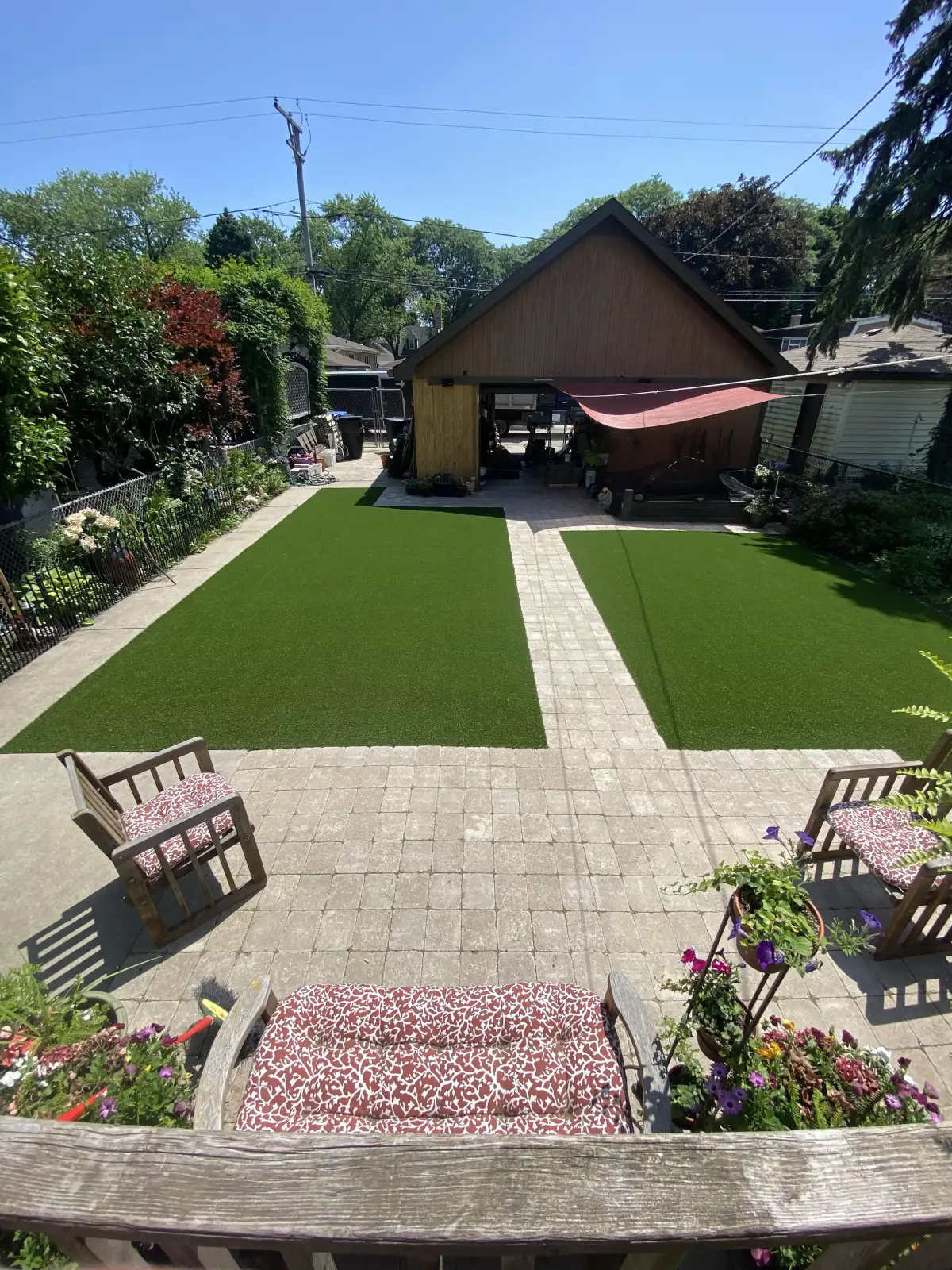
Before booking artificial turf installation in Benton Harbor, ask the installer to explain the plan for your ground, water, edges, access, and intended use. The visible turf matters, but the preparation below it determines whether the finished surface has the support and drainage it needs.
This is especially important when a yard already has low spots, downspouts empty near the project area, grass fails in shade, dogs follow the same route, or turf must meet a patio, walk, fence, or planting bed. A useful estimate should respond to those conditions instead of offering one standard assembly for every property.
Bring to the first conversation: approximate dimensions, photos after a hard rain, the location of downspouts and irrigation, gate widths, the primary viewing direction, and how people or pets will use the space.
1. What will you evaluate before recommending a system?
A site review should cover more than square footage. Ask how the installer evaluates the existing grade, soil conditions, water routes, downspouts, shade, pet traffic, nearby hardscape, and access for removing and delivering material. Those observations shape excavation, drainage, edge restraint, turf selection, and equipment choices.
For Benton Harbor homeowners, the goal is not a generic local claim—it is a plan tied to the actual yard. If water collects in one corner or a narrow gate limits equipment, that should be discussed before the scope and schedule are finalized. The Benton Harbor service area page outlines the turf and related outdoor services available locally.
2. Where will water go after the turf is installed?
Permeable turf backing can let water move through the surface, but it does not decide where that water goes next. Ask how the finished grade, aggregate base, existing soil, low spots, and downspouts will work together. The installer should be able to identify the intended water path rather than simply say that the turf drains.
If the yard already stays wet after rain or snowmelt, ask whether turf preparation is enough or whether the scope needs a separate drainage solution. Treating an existing water problem during preparation is more direct than covering it and hoping the surface resolves it.
3. What exactly will be removed and built below the turf?
Ask what existing grass and organic material will be removed, how the area will be graded, which aggregate will form the base, how it will be placed and compacted, and how the final elevation will meet adjoining surfaces. Great Lakes Synthetic Turf uses drainage stone base preparation as part of its installation approach.
The answer may change with soil, intended use, access, and water conditions. A side yard used by dogs, a full lawn, and a putting green should not be treated as identical projects. What matters is that the proposal describes the construction under the turf clearly enough for you to compare it with another estimate.
4. How will edges, seams, and fiber direction be handled?
Edges need a secure transition where turf meets beds, concrete, pavers, fencing, or gravel. Great Lakes Synthetic Turf uses framed edge containment. Ask where the restraint will run, how it will be secured, and whether gates or repeated traffic need special attention.
Also ask the installer to show the planned fiber direction and likely seam locations. Turf fibers have a viewing direction, so the view from the house, patio, or main entry should influence the layout. Complex shapes can require seams and material cuts; those details should be planned before rolls are placed.
Artificial Turf Installation
Review the complete installation process, from site preparation through finishing.
Benton Harbor Service Area
See the turf, drainage, hardscaping, and outdoor services available in Benton Harbor.
Michigan Turf Drainage
Learn how grading, aggregate, surface permeability, and water routes work together.
5. Why is this turf product right for this use?
Instead of asking only which product is “best,” explain how the area will function. A front lawn viewed from the street, a shaded family space, a dog run, and a backyard putting green have different priorities. Ask why the proposed pile height, density, blade structure, backing, color blend, and infill fit your specific use.
Pet owners should discuss rinse access, permeability, infill, cleaning, odor management, secure edges, and high-traffic routes. Golf use calls for purpose-built putting material and precise contour work, not landscape turf with cups added. Visit the pet turf installation or putting green installation page for those specialized systems.
6. How will access and existing features affect the project?
Installation involves removing material and bringing aggregate, turf rolls, tools, and compaction equipment to the work area. Show the installer narrow gates, steps, fences, irrigation, roots, utility equipment, and any surfaces that must be crossed or protected.
Ask what needs to be moved before work begins and how limited access affects hauling, equipment, labor, or timing. Access is not a small administrative detail; it can materially change how the installation is built.
7. What is included in the written estimate?
Compare proposals line by line. The written scope should identify the measured area and intended use along with excavation, disposal, grading, base construction, compaction, drainage work, edge restraint, turf product, seams, infill, cleanup, and any related work.
Also ask how changes will be handled if excavation exposes unsuitable soil or a hidden water issue. A clear change process helps separate known scope from conditions that cannot reasonably be confirmed before work begins.
8. What should I do before the installation date?
Confirm who will mark irrigation, move furniture, provide access, handle pets, and identify any private utilities or landscape features. Ask where materials and equipment will be staged and which access route will be used. Before work starts, you should also have the turf selection, layout direction, transitions, drainage plan, and final scope documented.
- The project area and intended use are defined.
- Existing grade, water routes, downspouts, and low spots are addressed.
- Excavation, disposal, aggregate base, and compaction are described.
- Turf product, infill, fiber direction, seams, and edge restraint are specified.
- Access limits and transitions to patios, walks, beds, or fences are included.
- Cleanup, responsibilities, and scope-change handling are clear.
Plan your Benton Harbor turf consultation
A strong consultation should leave you with a clearer understanding of the complete system: what is removed, what is built, how water moves, how the perimeter is secured, and why the selected surface fits the way you will use the yard.
Great Lakes Synthetic Turf provides artificial turf installation for Benton Harbor properties and communities across Michigan. To share your project details and request a site-specific estimate, contact Great Lakes Synthetic Turf or call (231) 414-6011.
FAQ
What should a turf installer inspect before preparing an estimate?
The review should account for the area's size and intended use along with grade, soil conditions, water flow, downspouts, low spots, shade, access, irrigation, roots, and transitions to patios, walks, beds, or fences.
Does artificial turf solve a wet-yard problem on its own?
No. Permeable turf can allow water through the surface, but the grade, aggregate base, downspouts, low spots, and discharge route still need a workable drainage plan.
Can artificial turf be installed directly over an existing lawn?
Professional installation typically requires removing grass and unsuitable organic material, correcting the grade, and constructing a compacted aggregate base instead of laying turf directly over living grass.
What should be included in an artificial turf installation proposal?
A clear proposal should identify the measured area, excavation and disposal, grading, base construction, drainage work, edge restraint, turf product, seams, infill, access considerations, cleanup, and how scope changes will be handled.