
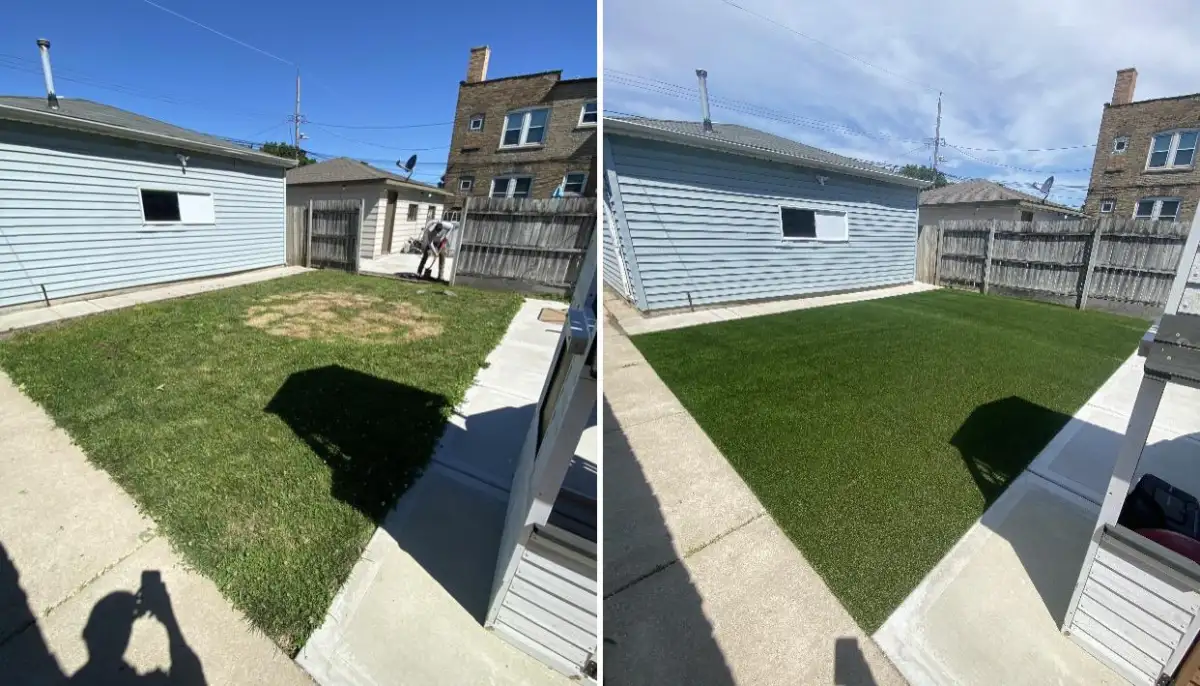
Before booking artificial turf installation, ask how the installer will build the base, move water, secure the perimeter, and define the full scope in writing. Those details have more influence on long-term performance than choosing a turf sample by color or softness alone.
That distinction matters in Benton Harbor. Southwest Michigan properties can combine heavy rain and snowmelt with freeze-thaw cycles, shaded areas, downspout discharge, sandy pockets, compacted soil, and transitions to patios or walks. The right plan starts with the conditions in the specific yard instead of assuming one standard assembly works everywhere.
Start with the ground: Ask the installer to explain what will be excavated, how the finished grade will be set, what forms the compacted base, and where water will move after the turf is installed.
1. What is included in the installation scope?
A useful proposal should describe more than “turf and labor.” Ask whether the scope includes removal of grass and organic material, hauling and disposal, grading, aggregate base, compaction, edge restraint, turf layout, seams, infill, final grooming, and cleanup. If sprinklers, downspouts, drains, tree roots, pavers, or landscape beds affect the area, the proposal should explain how they will be handled.
This makes estimates easier to compare. A lower total can reflect a different product, but it can also reflect less excavation, a thinner base plan, omitted disposal, fewer drainage corrections, or an edge detail that is not equivalent. Compare the described assembly and responsibilities, not only the bottom line.
2. How will drainage work after installation?
Artificial turf does not make existing water problems disappear. Permeable backing can let water through the surface, but that water still needs to move through the base and away from the yard. Ask how the installer will identify low spots, set slope, deal with downspouts, and connect the area to an appropriate discharge route.
Great Lakes Synthetic Turf builds around drainage stone base preparation. If the property already holds water after rain or snowmelt, review whether the project also needs a dedicated drainage solution. Correcting the water path during site preparation is more direct than expecting the finished turf to hide a drainage issue.
3. What will be placed under the turf?
Ask which aggregate will be used, how deep excavation must go for this yard, how the material will be placed and compacted, and how the finished elevation will meet adjoining walks, patios, beds, or steps. The answer should relate to the soil, intended use, drainage plan, and existing grades on the property.
A stable, drainable base helps the surface stay even through regular use and seasonal movement. Organic soil is not a reliable structural base. For a professional installation, grass and unsuitable material are generally removed before the aggregate system is built.
4. How will the edges, seams, and turf direction be planned?
Perimeter restraint helps keep the installation secure where turf meets beds, stone, concrete, or other materials. Great Lakes Synthetic Turf uses framed edge containment as part of its installation method. Ask where that restraint will be placed and how vulnerable edges near gates, dog routes, play areas, or narrow side yards will be protected.
Also ask how roll direction and seams will be laid out. Turf fibers have a direction, so the viewing angle from the house or patio matters. Irregular yard shapes may require seams; the proposal should account for their placement rather than treating layout as an afterthought.
Artificial Turf Installation
Review the full installation process, base preparation, seams, and finishing details.
Benton Harbor Service Area
See available turf, drainage, and outdoor services for Benton Harbor properties.
Michigan Turf Drainage Guide
Understand how surface permeability, grading, aggregate, and water routes work together.
5. Is the product selected for the way the yard will be used?
A lawn viewed from a patio, a family play space, a dog run, and a putting green do not have the same performance priorities. Ask why the proposed pile height, density, blade structure, backing, and infill suit the intended use. View samples outdoors beside the house and hardscape, then press the fibers to see how they recover.
Dog owners should ask about permeability, rinse access, pet-appropriate infill, secure edges, and high-traffic areas. A putting green needs a purpose-built surface and precise grading rather than landscape turf installed with cups. Use the dedicated guidance for pet turf installation or putting green installation when either use is central to the project.
6. How will access and nearby features affect the work?
Artificial turf installation requires removing material and bringing aggregate, turf rolls, tools, and compaction equipment into the work area. Show the installer gates, narrow passages, fences, steps, septic components, irrigation, air-conditioning units, mature trees, and hardscape transitions. Limited access can change equipment choices, labor, hauling, and schedule.
Ask what must be moved before work begins, which parts of the property need protection, and how the crew will leave the access route. These are practical scope details and should be discussed before the installation date.
7. What should the written estimate make clear?
Before signing, look for an itemized description of excavation, disposal, base construction, drainage work, perimeter restraint, turf product, infill, seams, labor, and cleanup. Confirm how changes will be handled if excavation reveals unsuitable material or a water issue that could not be seen at the initial visit.
- The measured area and intended use are clearly identified.
- Excavation, disposal, aggregate, compaction, and finished grade are described.
- The drainage path and any separate drainage work are explained.
- The turf product, infill, seams, roll direction, and edge restraint are specified.
- Access limitations and hardscape or landscape transitions are accounted for.
- Cleanup, change handling, and the next step are clear in writing.
Ask for a plan tied to your Benton Harbor property
The most useful consultation is site-specific. Share the approximate dimensions, how the space will be used, where water collects, whether dogs use the yard, and which edges meet patios, walks, or planting beds. Photos can help start the conversation, while an on-site review allows grades, access, and transitions to be evaluated directly.
Great Lakes Synthetic Turf provides artificial turf installation and related drainage services for Benton Harbor and communities across Michigan. To discuss your yard, visit the contact page for a free estimate or call (231) 414-6011.
FAQ
What should I ask before booking artificial turf installation?
Ask what will be removed, how the area will be graded, which aggregate base and edge restraint will be used, where water will go, how seams and infill will be handled, and what the written estimate includes.
Does artificial turf fix an existing drainage problem?
Not by itself. Permeable turf can let water pass through the surface, but the base, grade, downspouts, low spots, and discharge route still need a workable drainage plan.
What affects an artificial turf installation estimate?
Square footage, excavation and disposal, site access, base preparation, drainage work, perimeter details, turf product, infill, seams, pet or putting-green requirements, and nearby hardscape can all affect the scope.
Can artificial turf be installed over existing grass?
A durable professional installation generally requires removing grass and organic soil, establishing the correct grade, and building a compacted aggregate base rather than laying turf directly over a living lawn.
What should dog owners ask about pet turf?
Ask about surface permeability, base drainage, secure edges, pet-appropriate infill, rinse access, cleaning expectations, and reinforcement at gates or other high-traffic routes.
How should a turf installation account for Michigan winters?
The plan should focus on drainage, stable base construction, compaction, and secure perimeter restraint so water and seasonal freeze-thaw movement are addressed below and around the turf.